What Is a Bike Travel Case?
A bike travel case is a purpose-built container designed to protect your bicycle during transport — typically by air, rail, or courier service. Unlike a cardboard box from your local bike shop (which, let's be honest, is held together by hope and packing tape), a proper bike travel case is engineered to absorb impacts, resist crushing, and keep your components safely in place through the roughest baggage handling imaginable.
These cases come in a wide range of formats, from soft-sided fabric bags with padded panels to rigid hard-shell cases built from polycarbonate or ABS plastic. Each approach has its trade-offs, and the best choice depends on how often you travel, what kind of bike you're bringing, and how much protection you're willing to carry around at your destination.
Hard Cases vs. Soft Cases: Understanding the Main Difference
This is the question most cyclists face first, and it's worth taking seriously.
Hard Shell Cases
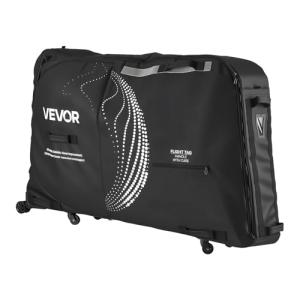
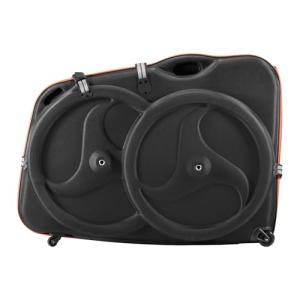
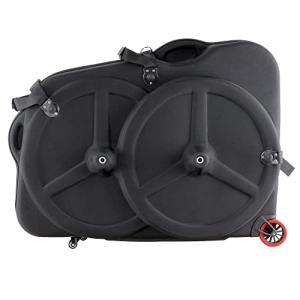
Hard cases are the gold standard for maximum protection. Built from impact-resistant materials like polycarbonate, ABS plastic, or even reinforced aluminum, these cases create a rigid shell around your bike that resists crushing forces. If a baggage handler stacks three other bags on top of yours — and they will — a hard case is what keeps your carbon frame intact.
Hard cases typically feature lockable closures, often TSA-approved, so your bike stays secure and you stay compliant with airline security requirements. Many include integrated wheels and ergonomic handles, making them surprisingly easy to roll through airports despite their substantial size. Some premium models even incorporate a built-in bike work stand inside the case, so when you arrive at your destination, you have a proper setup point right there in your hotel room.
The downsides? Hard cases are heavier, more expensive, and harder to store at your destination. If you're staying at a small hotel or a friend's apartment, a hard-shell case can take up a lot of floor space. Some riders solve this by leaving the case at the airport or shipping it ahead, but that adds logistical complexity.
Soft Cases and Hybrid Bags
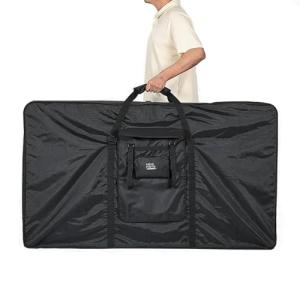
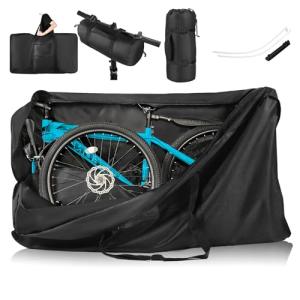
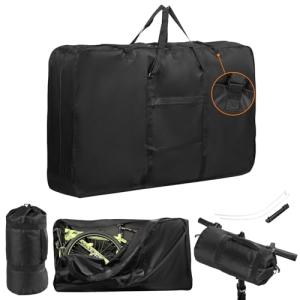
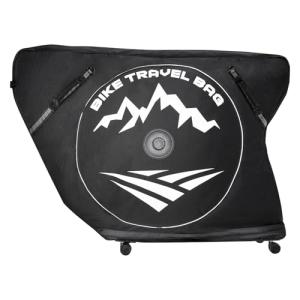
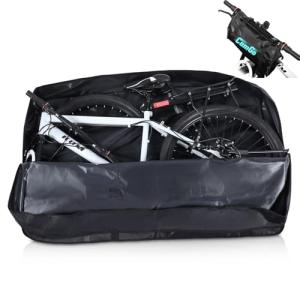
Soft bike travel bags are lighter, more flexible, and much easier to store when you're not traveling. Many of them collapse down to a fraction of their packed size, which is a real advantage when you arrive at a destination and need somewhere to stow your case for a week. Some models fold down to the size of a large duffel bag.
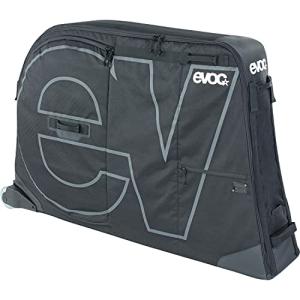
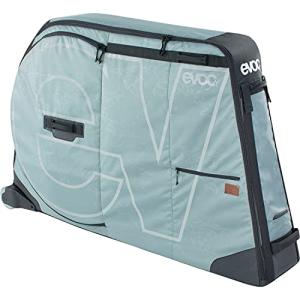
Don't let the word "soft" mislead you, though. The best soft-sided bike bags use reinforced panels, internal frame systems, and thick foam padding to provide serious protection. Brands like EVOC have developed sophisticated internal structures — including separate wheel compartments, reinforced fork mounts, and handlebar protection blocks — that genuinely protect a bike through normal airline travel.
Hybrid cases bridge the gap, combining a flexible fabric exterior with hard polycarbonate sections at the most vulnerable points — typically the top of the case where the frame sits. This gives you meaningful impact resistance where it counts, while keeping weight and bulk more manageable.
Key Features to Look For
Shopping for a bike travel case can feel overwhelming with so many options on the market, so here are the features that actually matter.
Wheel and Roller System
Moving a bike case through an airport is its own physical challenge. Look for cases with large, smooth-rolling wheels — ideally multi-directional casters that swivel freely, so you can maneuver around corners without wrestling the thing. Skate-style wheels on a four-corner base give you the most stability and control. Some cases include a separate clip-on wheel system that folds into the bag when not needed, keeping the packed dimensions smaller.
Internal Fixation and Padding
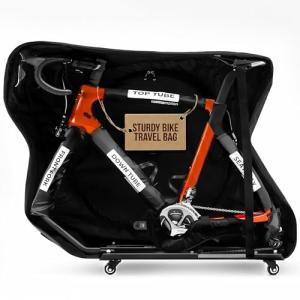
How your bike is held in place inside the case matters as much as the outer shell. A bike that shifts and rattles during transport can damage itself even inside a perfect outer case. Look for internal fork mounts that accept your axle standard — modern cases should accommodate quick release, 12mm thru-axle, 15mm thru-axle, and boost spacing. Adjustable frame fixation systems accommodate different frame geometries, while dedicated padding blocks protect the handlebar, seatpost, and drivetrain from contact with the case walls.
Separate wheel compartments are a significant upgrade over designs where the wheels sit loose inside the main cavity. When wheels are isolated, you eliminate the risk of tire contact with the frame and keep disc rotors away from anything that could bend them.
Dimensions and Airline Compatibility
Bike cases exist in a complicated relationship with airline oversize baggage policies. Most airlines measure the sum of length, width, and height (linear inches or centimeters), and cases that exceed a certain threshold — typically 158cm or 62 linear inches combined — attract extra fees. Cases designed with this in mind use clever packing systems to minimize dimensions without compromising bike fit.
If avoiding oversize fees is a priority, look for cases with dimensions specifically noted as staying within airline limits. Several brands openly market this feature, and for frequent travelers it can mean saving a significant amount of money over a season of trips.
Storage and Collapsibility at Destination
Unless you're traveling in a way that lets you leave your case somewhere, you'll need to think about what happens to it once your bike is unpacked. Hard cases are the least forgiving here — they stay exactly as large as they were when you arrived. Soft cases and hybrid designs often fold down dramatically, with some collapsing to 140 x 38 x 24 cm or similar compact dimensions, stowing under a bed or in a wardrobe without drama.
TSA Locks and Security
Airline regulations in many countries require that checked bags be accessible for inspection. TSA-approved locks let security personnel open and relock your case without destroying the latches. For hard cases especially, look for robust locking mechanisms — latches and hinges are potential failure points, and some riders tape or zip-tie cases for extra security even with locks in place.
Which Bikes Fit Which Cases?
Not every bike travel case fits every bike, and sizing is one of the most important things to check before you buy.
Road and gravel bikes are the most commonly catered-to category. Their geometry is compact, and most road-specific cases are designed with wheelbase limits around 110cm, which covers the vast majority of production road frames. For cyclocross bikes and wider gravel rigs, check that the case handles your tire clearance, particularly if you run 40mm or wider rubber.
Mountain bikes present a different challenge. Longer wheelbases — especially on modern trail and enduro bikes — require cases built for the MTB market, with wheelbase accommodation up to 130cm and tire clearance for 29" x 3.0" or 27.5"+ rubber. If you're bringing a plus-size or fat bike, you'll need a large-volume case or a specifically rated XL bag, as standard dimensions simply won't fit the width of those tires.
Triathlon and time trial bikes are among the trickiest to travel with because of their aero cockpits and unusual bar geometry. Some cases require full handlebar removal, which means you'll need to re-fit and re-torque everything at your destination — not ideal before a race. The most triathlon-friendly cases allow you to travel with the cockpit largely intact, only requiring wheel and pedal removal, which is a genuine time-saver on race morning.
BMX bikes have their own dedicated travel bag designs that account for the shorter but wider geometry of those frames. Electric bikes are an increasingly common travel item too, though it's worth noting that most airlines prohibit checked lithium batteries above a certain watt-hour rating — always confirm your airline's e-bike policy before assuming you can bring it.
How Much Disassembly Is Required?
This question divides cyclists more than almost any other. Some people are perfectly comfortable pulling their bike apart and reassembling it at the destination — they see it as a chance to do a quick service check. Others would rather not touch their bike setup at all, especially if it's dialed in for a race.
Most cases require removing wheels and pedals at minimum. Many also require removing the saddle and seatpost, rotating or removing the handlebars, and potentially pulling the rear derailleur or fitting a derailleur hanger protector. The amount of disassembly directly affects how long packing takes and how much you risk disturbing your fit.
At the minimal-disassembly end of the spectrum, some premium bags — particularly those marketed at triathlon and professional road cycling — are designed so that only wheels and pedals need to come off, with the rest of the bike traveling intact. These bags tend to be larger and more expensive, but the convenience factor is real.
Cases that include a built-in work stand are worth special mention here. Being able to mount your fork to a stable stand while you reattach components, check cable tension, and set your position makes the whole process dramatically easier and more accurate. Some of these integrated stands are robust enough to use as a regular home work stand, making them a two-in-one value proposition for anyone without a dedicated repair stand.
Airline Fees and Practical Logistics
Let's talk money, because traveling with a bike is never just the cost of the case. Most major airlines charge extra for bikes as checked luggage — fees vary widely but commonly run between $30 and $200 each way depending on the carrier and the route. International flights on budget carriers can be significantly more. Always check directly with your airline before booking, and factor bike fees into your travel budget.
Some airlines classify bikes by dimensions rather than by whether they're declared as a bike. A well-packed, compact case may pass as oversized luggage rather than sporting equipment, which on some carriers carries a lower fee. It's worth researching this before your trip, though policies change frequently and you should never rely on assumptions.
Travel insurance that covers sports equipment is a sensible addition if you're traveling with a high-value bike. A quality carbon road bike or full-suspension mountain bike is worth thousands of dollars, and even the best travel case can't guarantee against every possible scenario.
Caring for Your Bike Travel Case
A good bike travel case is a long-term investment, and with reasonable care it should last for many years of trips. After each journey, check latches and hinges for wear, inspect foam padding for compression, and clean the interior if any grease or lubricant has transferred from the drivetrain. Wheel axles and castors should roll freely — a drop of lubricant on stuck swivel wheels makes a real difference when you're running through an airport.
Store the case assembled if you have space, or folded and flat if you're working with a soft bag. Avoid leaving hard cases in extreme heat (like a hot car trunk in summer), as prolonged exposure can warp plastic components over time.
The best bike travel case is ultimately the one you'll actually use — the one that suits your travel frequency, matches your bike type, fits comfortably into your travel routine, and gives you confidence that your bike will arrive ready to ride. A weekend racer who flies six times a year needs something different from a cycle tourist who travels once every few summers.