Fat tire bikes are perfect for anyone who loves to explore off the beaten path. With their oversized tires, they offer amazing stability and grip on all sorts of terrain, from sandy beaches to snowy trails. If you’re looking for a fun ride that can handle anything nature throws your way, these bikes are a fantastic choice.
Fat Tire Bikes
Discover your next adventure with these sturdy and fun fat tire bikes perfect for all terrains
Product List
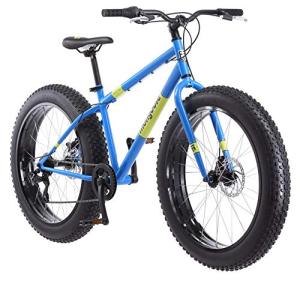
Mongoose Dolomite Fat Tire Mountain Bike, for...
Product Review Score
4.32 out of 5 stars
102 reviews$611.99
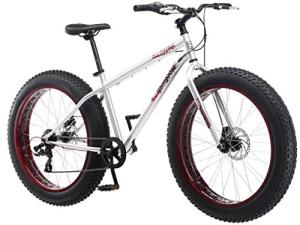
Mongoose Malus Mens and Womens Fat Tire Mount...
Product Review Score
4.94 out of 5 stars
108 reviews$519.99
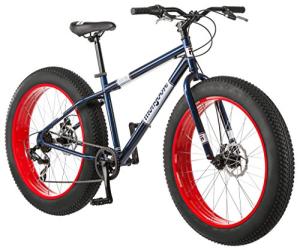
Mongoose Dolomite Fat Tire Mountain Bike, For...
Product Review Score
4.38 out of 5 stars
162 reviews$560.00
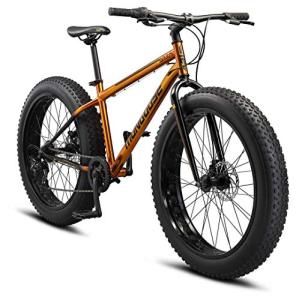
Mongoose Argus ST Fat Tire Mountain Bike for...
Product Review Score
4.92 out of 5 stars
116 reviews$434.99
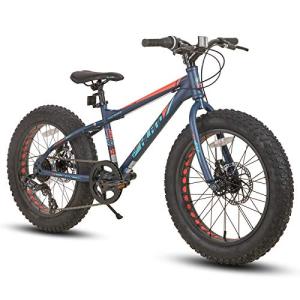
HH HILAND 20 Inch Kids' Bicycles Fat Tire Mou...
Product Review Score
4.14 out of 5 stars
8 reviews$229.99
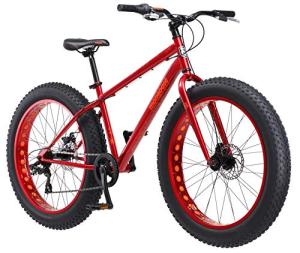
Mongoose Aztec Mens and Womens Fat Tire Bike,...
Product Review Score
4.27 out of 5 stars
36 reviews$687.89
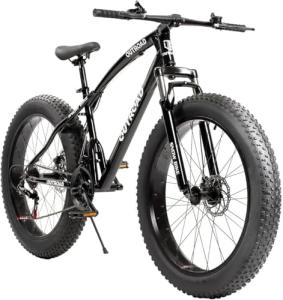
MarKnig 26 inch Fat Tire Mountain Bike with 4...
Product Review Score
4.79 out of 5 stars
148 reviews$359.98 $339.98
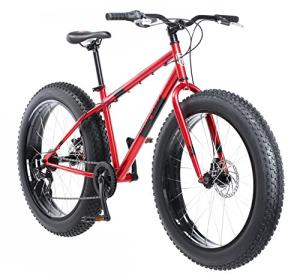
Mongoose Dolomite Fat Tire Mountain Bike, For...
Product Review Score
4.45 out of 5 stars
126 reviews$719.99
What Exactly Is a Fat Tire Bike?
You've probably spotted them on the trail, the beach, or rolling through a snowy neighborhood and done a double-take. Those impossibly wide tires look like they belong on a small tractor, not a bicycle. But that's kind of the point — and once you understand what fat tire bikes are built for, the chunky silhouette starts to make a whole lot of sense.
A fat tire bike is simply a bicycle equipped with oversized tires, typically ranging from 3.8 to 5 inches wide. To put that in perspective, a standard road bike rolls on tires barely an inch across, and a typical mountain bike tops out around 2.5 inches. Fat tire bikes are in a different league entirely. They also run at dramatically lower tire pressures — often just 5 to 15 PSI compared to 80–120 PSI on a road bike — which is a big part of what makes them so capable on soft, uneven, or unpredictable surfaces.
The frames are purpose-built too. Wider forks, broader rear stays, reinforced hubs, and beefier rims are all part of the package, engineered to handle the extra stresses that come with going places most bikes simply can't follow. Whether in aluminum, steel, or carbon fiber, fat bike frames are designed to take a beating and keep rolling.
A Brief History: From DIY Rigs to Mainstream
Fat bikes aren't some recent invention cooked up by a marketing team. Riders have been experimenting with wide tires for over a century, though the modern fat bike emerged more clearly in the 1970s and '80s, when inventive cyclists started welding multiple rims together side by side to increase their footprint on snow and sand. What started as a niche hack for extreme-weather adventurers has grown into one of the most widely recognized bicycle categories in the world.
Today, fat bikes are a common sight in mountain towns, on coastal paths, and in snowy neighborhoods across every continent. Iconic bikepacking routes like the Alaska Highway see more fat bike traffic each year, and the category keeps expanding with new frame geometries, component options, and the increasingly popular integration of electric motors.
The Core Advantage: Going Everywhere Other Bikes Can't
Here's the headline benefit, plain and simple: fat tire bikes go places that would stop any other bicycle dead in its tracks.
Those wide, low-pressure tires create a dramatically larger contact patch between rubber and ground. Instead of a postage-stamp-sized footprint like a regular tire, a fat tire spreads weight across a surface area that essentially lets the bike float rather than sink. On soft sand, deep snow, or muddy trails, this is transformative. While a standard bike would bog down, spin out, or lose traction entirely, a fat bike rolls through with surprising composure.
The tread plays a role here too. Knobbier, deeper-treaded fat tires are ideal for mud and loose terrain, while smoother options suit urban commuting or packed gravel. Studded fat tires take things even further, gripping ice in ways that would be reckless on any other type of bicycle. Whatever the surface, there's almost certainly a fat tire configuration designed to handle it.
Stability You Can Actually Feel
One of the first things new fat bike riders notice isn't the terrain capability — it's the feeling of planted, confident stability from the very first pedal stroke.
That wide contact patch does more than just prevent sinking. It creates a broad, stable base that makes the bike feel grounded and secure, even at low speeds or when navigating awkward angles. For beginners or riders returning to cycling after a long break, this stability is genuinely reassuring. It removes the wobbly uncertainty that can make starting and stopping on a regular bike feel precarious.
Experienced riders feel it too, especially on technical terrain. Rolling over roots, rocks, and uneven ground, the fat tire bike stays predictable in a way that builds confidence. The wider wheelbase distributes weight more evenly, which matters particularly for heavier riders or anyone carrying cargo — fat bikes routinely handle riders well over 300 pounds without compromising performance on hills or trails.
Natural Suspension: The Cushioning Effect
Most fat bikes don't have elaborate suspension systems, and in many cases, they don't need one. The tires themselves act as a remarkably effective shock absorber.
All that air volume inside a fat tire absorbs impacts passively and continuously. Small rocks, cracks, roots, potholes — they get swallowed rather than transmitted directly to your wrists and lower back. On longer rides, the difference becomes significant. Riders frequently report far less fatigue and physical strain on a fat tire bike compared to a rigid setup with narrow tires. It's a more forgiving ride that lets you stay out longer, go farther, and feel better afterward.
City commuters have discovered this benefit in a big way. Urban infrastructure is rough — broken pavement, construction zones, unexpected curbs, and debris-littered bike lanes are everyday obstacles. On a fat tire bike, those hazards stop being hazards. The cushioning effect means you're less likely to be thrown off balance by a pothole you didn't see coming, and the stability makes navigating chaotic traffic feel more manageable.
Year-Round Riding, No Excuses
Most cyclists pack it in when the weather turns. Roads get icy, trails turn to slop, and the bike hangs in the garage until spring. Fat tire bikes are one of the most effective tools for breaking that cycle (no pun intended).
Snow and ice are where fat bikes particularly shine. The wide contact area keeps you stable on surfaces that would be genuinely dangerous on a regular bike, and the low tire pressure lets the tire conform and grip rather than slide. Winter fat biking has become its own subculture, with organized rides and routes in cold-weather destinations from Scandinavia to the American Midwest. In some northern communities, the fat bike is simply the year-round commuter vehicle of choice.
Summer brings its own all-season advantages. Beach riding — genuinely floating over soft sand rather than sinking with every stroke — is one of those experiences that's hard to describe until you've tried it. Desert terrain, loose gravel, and overgrown trails that would be miserable on a hardtail mountain bike become genuinely enjoyable on a fat tire setup.
Fat Tire Electric Bikes: A Category Within a Category
The rise of electric-assist fat bikes has arguably been the biggest development in this category in the past decade. Combining the terrain versatility of fat tires with the power of an electric motor creates something genuinely unique in the cycling world.
A fat tire e-bike handles surfaces that stop other e-bikes — soft sand, deep snow, steep climbs on loose ground. The motor adds power right where you need it most, helping you push through resistance that would make a standard rider (and a standard bike) give up. For longer distances on challenging terrain, this combination makes the fat tire e-bike one of the most capable and accessible vehicles available.
From a practical standpoint, fat tire e-bikes are particularly well-suited to riders who want to cover serious ground without arriving exhausted, commuters dealing with rough urban infrastructure, and anyone who wants to ride more frequently without worrying about conditions. Motor power typically ranges from 750W for mixed-terrain use up to 1,000W or more for heavy loads and steep climbs, while battery capacity in the 48V/15–20Ah range delivers 40–60 miles of range per charge depending on terrain and assist level.
The weight is worth acknowledging honestly. Fat tire e-bikes generally run 70 to 90 pounds, significantly heavier than their non-electric counterparts. If you need to carry the bike upstairs regularly or maneuver in very tight spaces, that's something to factor in.
The Health and Fitness Angle
Fat tire bikes have a surprisingly compelling case to make in the health and fitness conversation.
Riding through sand, snow, or soft terrain requires more physical effort than rolling on pavement. The resistance is constant and full-body, making fat bike rides a legitimate cardiovascular workout without feeling punishing. The lower impact on joints — courtesy of all that natural suspension — makes this type of cycling accessible to a wider range of riders, including older adults or those recovering from injuries who want to stay active without high-impact stress.
There's also a psychological dimension worth mentioning. Fat bikes invite a slower, more exploratory style of riding. You're not racing — you're exploring. That unhurried engagement with the outdoors tends to be something people actually look forward to and maintain as a habit, rather than grinding through sessions that feel like obligation. The low barrier to entry (almost anyone can hop on a fat bike and feel comfortable quickly) means more people ride more often, which compounds health benefits over time.
Choosing the Right Fat Tire Bike: What to Consider
Before you buy, a few key factors are worth thinking through carefully.
Tire width is the obvious starting point. Most fat bikes run 4- to 4.8-inch tires, which covers the vast majority of use cases. Wider isn't always better — if you're splitting time between off-road adventures and paved commuting, something in the 4-inch range strikes a good balance.
Frame material matters for both weight and durability. Aluminum is the most common choice, offering a solid balance of strength and affordability. Carbon fiber frames reduce weight significantly but cost more. Steel is durable and comfortable but heavier.
Suspension or rigid is a real decision. Most fat bikes are rigid — they rely on tire volume for cushioning. Front suspension forks add comfort on more technical terrain but add weight and maintenance complexity. For casual riding, beach use, or snow commuting, rigid is usually plenty.
Electric or non-electric depends on your riding goals and the terrain you're targeting. If you want to cover long distances, tackle significant hills, or ride year-round in demanding conditions without exhausting yourself, the electric assist is hard to argue against.
Tire pressure is the most overlooked variable for new riders. Lower pressure (around 5–10 PSI) maximizes traction and cushioning on soft or loose surfaces. Higher pressure (closer to 20 PSI) reduces rolling resistance on packed trails or pavement. Getting comfortable with adjusting pressure based on conditions is one of the simplest ways to dramatically improve your ride.
Budget typically starts around $800–1,200 for a quality entry-level fat bike, with mid-range options in the $1,500–2,500 range offering meaningfully better components. Electric models generally start around $1,500 and climb from there depending on motor power, battery capacity, and frame quality.
Who Fat Tire Bikes Are Built For
The honest answer is: more people than you might expect.
If you live somewhere with real winters and want to keep riding through them, a fat bike is one of the most practical purchases you can make. If you're drawn to beach rides, desert exploration, or backcountry bikepacking, fat tires open terrain that's simply off-limits otherwise. If you're a commuter dealing with rough city infrastructure and want a more forgiving, confidence-inspiring ride, fat tires deliver that too.
They're equally at home on technical trails as on groomed paths, and they accommodate a wide range of rider sizes, fitness levels, and experience. The learning curve is gentle — almost anyone can ride one comfortably from day one — but the ceiling for adventure and exploration is genuinely high.
Fat tire bikes won't win a road race or carve tight singletrack the way a dedicated mountain bike will. But for riders who want one bike that handles almost everything they can throw at it, confidently and comfortably, the fat tire bike makes a compelling case that's hard to dismiss.