Shop our range of road bikes for every rider — from beginner-friendly endurance models to lightweight carbon race machines. Find the perfect fit, explore top brands, and ride further, faster.
Road Bikes
Product List
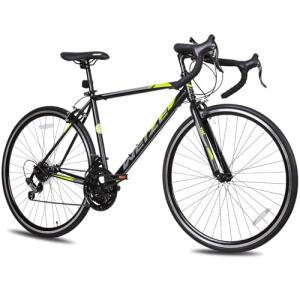
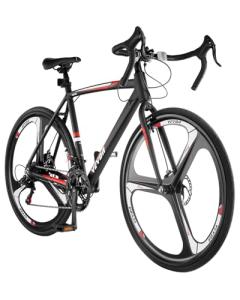
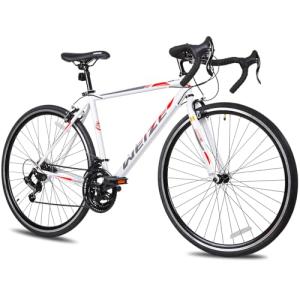
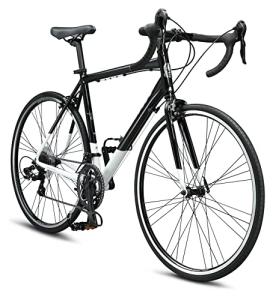
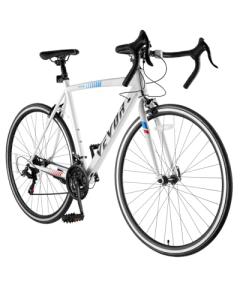
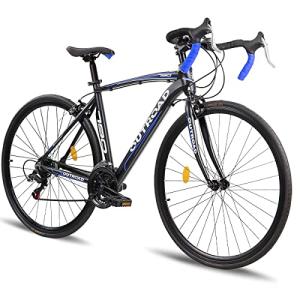
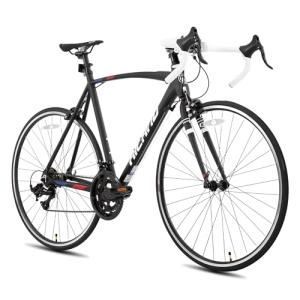
HILAND Lightweight 700C Road Bike
Product Review Score
4.58 out of 5 stars
93 reviews$359.99 $249.99
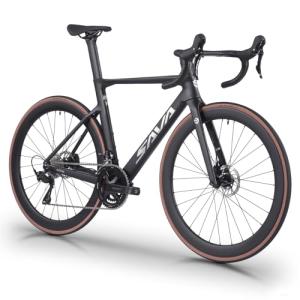
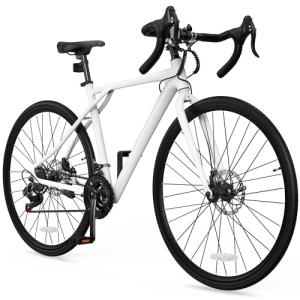
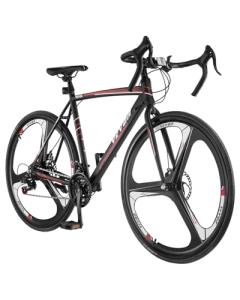
VEVOR Road Bike, 700C Wheels Racing Bike, Shi...
Product Review Score
4.31 out of 5 stars
161 reviews$359.99 $274.99
There's a specific kind of freedom that comes from clipping into a road bike and pushing off onto a long stretch of open asphalt. The hum of thin tyres. The way the whole machine seems to lean into a corner with you. The sensation of covering real ground — 30, 50, 80 miles — under nothing but your own power. Road cycling is one of those pursuits that hooks people deeply and keeps them for life. And it all starts with choosing the right bike.
Whether you're stepping into road cycling for the first time, upgrading from a decade-old steel frame gathering dust in the garage, or building out a dedicated fleet for racing season, this guide will walk you through what road bikes actually are, how they differ, and how to find the one that matches your riding.
What Makes a Road Bike a Road Bike?
At its core, a road bike is designed for one thing: moving efficiently on paved surfaces. That design philosophy shapes every decision — frame geometry, tyre width, gearing, handlebars, and weight. Compared to mountain bikes or hybrids, road bikes are leaner, lighter, and faster. They reward effort with speed.
The most recognisable feature is the drop handlebar. That curved, downward-sweeping bar isn't just about aesthetics — it gives you multiple hand positions, reduces wind resistance when you tuck low, and transfers power from your upper body into forward motion. Paired with a narrow saddle, clipless pedals, and stiff-soled shoes, a road bike turns you into a more biomechanically efficient engine.
Frames are typically made from aluminium, carbon fibre, steel, or titanium. Each material tells a different story about ride feel, weight, durability, and price — and we'll get into all of that below.
The Main Types of Road Bikes
Road bikes aren't one-size-fits-all, and the category has evolved significantly over the past decade. Here's how the main types break down:
Race Bikes
Built for speed above all else. Race bikes feature aggressive geometry — a low front end, a stretched riding position — that prioritises aerodynamics and responsiveness over comfort. These are the bikes you see in the Tour de France: feather-light carbon frames, stiff bottom brackets, deep-section wheels. They reward skilled, fit riders who spend hours in the saddle and want every watt of effort converted into forward motion.
If you're training seriously for events, time trials, or criteriums, a race bike makes sense. If you're a newer rider or someone who rides mostly for leisure, the aggressive position can get uncomfortable on longer rides.
Endurance Road Bikes
The most popular category for everyday riders. Endurance bikes are designed for comfort over long distances without sacrificing too much speed. They have a slightly more upright geometry, more tyre clearance (often 28–32mm tyres), and frame designs that absorb road vibration better. Some models use carbon layup techniques or built-in flex zones to smooth out rough roads.
These bikes are ideal for gran fondos, sportives, commuting, and long weekend rides. They're versatile, forgiving, and genuinely enjoyable for hours at a time. If you're unsure where to start, an endurance road bike is almost always the right answer.
Aero Road Bikes
Somewhere between a race bike and a regular road bike. Aero bikes have tube shapes engineered to cut through the wind — you'll notice flattened down tubes, integrated cable routing, and deep-section carbon forks. They're heavier than pure climbers but faster on flat and rolling terrain where air resistance is the main thing slowing you down.
Popular with triathletes, time trialists, and riders who spend most of their time on flat roads or rolling terrain. If you're chasing personal records on a local loop or doing long flat sportives, an aero road bike is worth considering.
Climbing Bikes
The opposite philosophy from aero bikes. Climbing bikes obsess over weight reduction — the lightest models dip below 6kg complete. Stiff, minimal frames. Compact geometry. Everything that isn't essential to going uphill fast has been stripped away. These are the bikes that separate the front group on mountain stages.
Unless you live somewhere mountainous and race or ride hard, a dedicated climbing bike is a specialist tool. Most riders are better served by a lightweight all-rounder or endurance bike that handles hills well without sacrificing versatility.
Gravel Bikes (Worth Mentioning Here)
Technically their own category, but gravel bikes have eaten into the road bike market significantly. They handle paved roads well while also coping with gravel tracks, farm lanes, and light off-road. If you want one bike that does everything, a gravel bike might be it. If you're certain you'll ride mostly tarmac and want maximum on-road performance, stick with a dedicated road bike.
Frame Materials Explained
Nothing shapes the character of a road bike more than what it's made from.
Aluminium
The default choice for entry-level and mid-range road bikes, and for good reason. Aluminium frames are stiff, reasonably light, and genuinely affordable. Modern aluminium construction has improved dramatically — a well-made aluminium frame from a reputable brand rides better than aluminium frames did even ten years ago.
The drawback is that aluminium transmits road vibration more readily than carbon or steel. It's not punishing, but on long rides over rough roads, you'll notice it. A good set of wider tyres (28mm+) and quality bar tape does a lot to compensate.
If you're spending under $1,000–$1,500 on a complete bike, aluminium is almost certainly what you're getting, and there's nothing wrong with that.
Carbon Fibre
The premium choice. Carbon frames are lighter, stiffer where they need to be, and can be engineered to damp vibration in ways aluminium can't. Designers can vary the layup — the direction and thickness of carbon layers — to tune the ride feel precisely. A good carbon frame feels alive in a way that's hard to describe until you've ridden one.
The trade-offs: cost and repairability. Carbon frames are significantly more expensive, and a hard impact can cause internal damage that's invisible to the eye but structurally significant. Carbon is also harder to repair than metal if it does crack.
Carbon makes sense if you're riding seriously and have the budget. Entry-level carbon frames (often with aluminium components) start around $1,500–$2,000. High-end builds go to $10,000 and beyond.
Steel
The original road bike material and still beloved by a dedicated community. Steel frames are heavier than carbon or aluminium but have a ride quality — often described as "springy" or "lively" — that many experienced cyclists prefer for long days in the saddle. Steel is also far easier to repair than carbon. A broken steel frame can often be welded by a local framebuilder.
Modern steel, particularly chromoly (chromium-molybdenum alloy), can be built into genuinely light frames. Steel is popular in the custom frame market and makes an excellent choice for touring, commuting, or anyone who prioritises long-term durability and ride comfort over outright weight savings.
Titanium
The most exotic mainstream material. Titanium combines many of steel's comfort properties with significantly better corrosion resistance and lower weight. Titanium frames are expensive — a bare frame can cost more than a fully built carbon bike — but they last essentially forever. Titanium doesn't corrode, doesn't fatigue the way aluminium does, and develops a reputation among long-term owners as the last frame they'll ever need to buy.
If budget isn't a constraint and you want a bike you'll still be riding in 30 years, titanium is worth serious consideration.
Groupsets: The Drivetrain and Braking System
The groupset is the collection of components that makes the bike move and stop — derailleurs, shifters, brakes, chainset, cassette, and chain. The main players are Shimano, SRAM, and Campagnolo, each offering tiered product lines from entry-level to professional racing.
Mechanical vs. Electronic Shifting
Mechanical groupsets use cables to actuate gear changes. They're reliable, easy to service at home, and have no batteries to worry about. For most riders, they work brilliantly.
Electronic groupsets (Shimano Di2, SRAM eTap, Campagnolo EPS) use small motors and wireless signals to change gears with a button press. Shifts are faster, more precise, and don't degrade as cables stretch. Trim adjustments can be made via an app. The downsides are cost and the need to charge batteries — though battery life is typically measured in months of normal use, not hours.
Electronic shifting was once the domain of professional racing. It's now available at mid-range price points and is genuinely worth the upgrade for frequent riders who value consistent performance.
Rim Brakes vs. Disc Brakes
This debate has largely settled in favour of disc brakes. Hydraulic disc brakes offer more consistent stopping power in all conditions — wet weather, long descents, steep grades — and require less hand effort to operate. They've become standard on new road bikes across most price points.
Rim brakes remain on some racing-oriented builds where marginal weight savings matter and conditions are controlled. They're also lighter and simpler to maintain. But for most real-world riding, discs are the better choice.
Sizing and Fit: The Most Important Factor Nobody Talks About Enough
A $500 bike that fits you correctly will be more enjoyable to ride than a $5,000 bike that doesn't. Road bike fit is genuinely important — and more nuanced than just picking a frame size.
Frame size is the starting point, typically measured in centimetres of seat tube length. Manufacturers publish sizing guides based on height and inseam length. Use them as a starting point, not a final answer.
Stack and reach — the vertical and horizontal distances from the bottom bracket to the top of the head tube — are better guides to how a frame will actually fit your body. Endurance frames tend to have higher stack (more upright), race frames lower stack (more stretched out).
If you're investing serious money in a road bike, a professional bike fit is worth every penny. A good fitter will assess your flexibility, riding style, and goals, then set up your saddle height, fore-aft position, handlebar height, and cleat alignment. Getting fit right prevents injury and dramatically improves both comfort and power.
Choosing Your Road Bike
The best road bike is the one that fits your body, suits the roads you ride, and makes you want to go out more often. Don't let spec sheets distract you from that.
Think about where you'll ride most. Think about how far. Think about whether you want to race, explore, or simply move. Then find a bike that matches that vision — at a price that lets you actually go out and use it rather than worry about it.
Road cycling rewards consistency. Whatever bike gets you out of the door and onto the road regularly is the right choice. The upgrades and refinements can come later. The riding starts now.