The road cycling world has always had a gatekeeping problem. For decades, the unspoken rule was simple: if you wanted a real road bike, you needed to spend real money. We're talking $800, $1,200, sometimes north of $2,000 before you could even think about clipping in and hitting the asphalt with anything resembling confidence. Entry-level riders were left choosing between department store junk that fell apart in six months or stretching their budgets to the breaking point for a name-brand machine they weren't even sure they'd use regularly.
Then brands like VEVOR showed up and started asking an uncomfortable question — what if a perfectly rideable road bike didn't have to cost a month's rent?
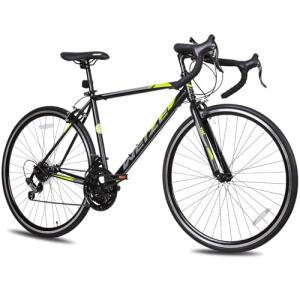
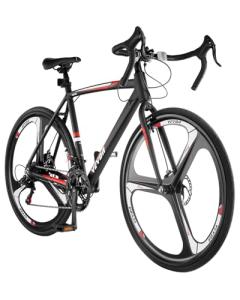
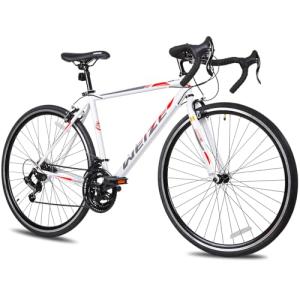
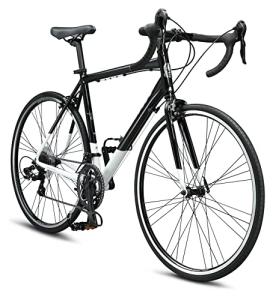
The VEVOR Road Bike, 700C Wheels Racing Bike with Shimano Drivetrain is the latest entry in this conversation. It's a city commuter and sport bicycle built for men and women, featuring drop-bar handlebars, a 21-speed Shimano gear system, disc brakes, and 700C wheels — all at a price point that makes seasoned cyclists do a double take. But the real question isn't whether it's cheap. The real question is whether it's good enough.
Let's break it all down.
Who is VEVOR, and Why Are They Making Bikes?
Before diving into the bike itself, it's worth addressing the elephant in the room. VEVOR is not a cycling company in the traditional sense. They're a sprawling consumer goods brand that manufactures everything from welding machines to kitchen equipment to industrial tools. Their entire business model revolves around delivering functional, no-frills products at aggressive price points — and they've built a serious following doing it.
Their move into bicycles is relatively recent, but it follows the same playbook. Source reliable components (Shimano, in this case), build a clean-looking frame, keep the margins razor-thin, and let the value proposition speak for itself. It's a strategy that works brilliantly for power tools and restaurant equipment. Whether it translates to something as nuanced and personal as a road bicycle is what makes this review worth writing.
First Impressions and Unboxing Experience
The VEVOR 700C arrives roughly 85% pre-assembled, which is standard for bikes in this category. Inside the box, you'll find the main frame with the rear wheel already installed, along with the front wheel, saddle, pedals, front brake assembly, and reflectors that need to be attached. VEVOR includes a basic tool kit, which is a nice touch that many competitors skip.
Assembly takes most people between 30 and 60 minutes, depending on mechanical experience. One critical step that the instructions emphasize — and that new builders sometimes miss — is rotating the front fork 180 degrees before installing the handlebars and front wheel. Skip that step, and you'll wonder why your bike wants to steer itself into a ditch. The pedals are also marked with L and R indicators, which matters because cross-threading a pedal is the kind of rookie mistake that can damage the crank arms permanently.
Overall, the unboxing experience is clean and well-organized. The packaging protects the frame and components adequately, and the included documentation, while basic, covers the essentials.
Frame and Build Quality
The frame on this particular VEVOR model is constructed from carbon steel with a matching carbon steel fork. Right away, this tells you something important about the bike's priorities. Carbon steel is heavier than aluminum, but it's also more forgiving. It absorbs road vibration better, it's more resistant to sudden impacts, and it's significantly cheaper to manufacture. For a city commuter that's going to encounter potholes, curb hops, and the general chaos of urban riding, carbon steel is actually a pretty smart choice.
The overall dimensions come in at approximately 68 x 18 x 38 inches, and the bike weighs around 36 pounds. That's heavier than most dedicated road bikes, which typically sit between 18 and 25 pounds for mid-range models. You'll feel that extra weight on climbs, no question. But on flat city streets and gentle rolling terrain, the difference is far less noticeable than numbers on a spec sheet might suggest.
The internal cable routing is a standout detail at this price point. By running the shift and brake cables inside the frame, VEVOR achieves a cleaner aesthetic and better protects the cables from dirt, rain, and debris. It's a feature you'd normally expect to see on bikes costing two or three times as much. It also reduces the likelihood of cable snags and makes the overall riding experience feel more refined.
The Shimano 21-Speed Drivetrain — Heart of the Machine
This is where the VEVOR 700C earns most of its credibility. The bike runs a Shimano drivetrain with a 21-speed (3x7) gear configuration, utilizing front and rear derailleurs for smooth, predictable shifting across a wide range of gears. Shimano's entry-level components are well-known in the cycling world for one critical reason: they work. They're not flashy, they're not the lightest, and they won't impress anyone at a cycling club meetup. But they shift cleanly, they hold up to regular use, and replacement parts are available at virtually every bike shop on the planet.
The 3x7 setup gives riders a solid spread of gearing options. The three front chainrings provide broad range — you've got low gears for grinding up hills, middle gears for everyday cruising, and high gears for when you want to open up the legs on a descent or a tailwind sprint. The seven-speed rear cassette fills in the gaps between those ranges, giving you enough granularity to find a comfortable cadence in most riding situations.
Is it comparable to a Shimano 105 or Ultegra groupset? Absolutely not. Those are race-grade components designed for competitive cyclists who need sub-second shift precision under load. But for commuting, fitness riding, and recreational road cycling, the entry-level Shimano system on the VEVOR is more than sufficient. It does what it needs to do, and it does it consistently.
Braking Performance
The version listed at Amazon (B0F2HLYW79) features disc brakes, which is a meaningful upgrade over the caliper brakes found on some other VEVOR road bike configurations. Disc brakes offer several tangible advantages for urban riders. They perform significantly better in wet conditions, they require less hand force to activate, and they provide more consistent stopping power across a wider range of weather and road conditions.
For a bike designed primarily for city commuting, disc brakes are arguably the smarter choice. Urban riding means unpredictable traffic, sudden stops, and the occasional rainstorm that turns your commute into a slip-and-slide scenario. Having brakes that respond predictably every single time isn't a luxury feature — it's a safety fundamental.
The mechanical disc brakes on the VEVOR won't match the performance of hydraulic systems found on higher-end bikes, but they're a substantial step up from basic rim brakes. They'll need occasional adjustment as the pads wear, but that's a straightforward maintenance task that any home mechanic can handle with basic tools.
Wheels and Tires — The 700C Standard
The bike rolls on 700C wheels, which is the standard size for adult road bicycles worldwide. This isn't a coincidence — it's a smart decision that ensures tire and tube replacements are always easy to find and reasonably priced. The 700C designation refers to the wheel diameter, and the tires on this VEVOR model are relatively narrow, which reduces rolling resistance and contributes to faster speeds on paved surfaces.
The stock tires are functional but represent one of the most obvious upgrade opportunities on the bike. Serious commuters will likely want to swap them out for something with better puncture protection after the first few hundred miles. This is true of virtually every budget road bike, not just the VEVOR — tire quality is always one of the first compromises manufacturers make when hitting a low price target.
The wheels themselves are alloy construction and come true from the factory, meaning they shouldn't wobble or rub against the brake pads out of the box. Multiple user reviews confirm that wheel trueness has been consistently good across units, which speaks well to VEVOR's quality control on this particular component.
The Drop Bar Experience
Drop handlebars are one of the defining features that separate a road bike from a hybrid or commuter bike, and the VEVOR comes equipped with a classic drop-bar setup. This gives riders access to multiple hand positions — the tops for relaxed cruising, the hoods for general-purpose riding, and the drops for an aggressive, aerodynamic tuck when you want to pick up speed.
For new riders who've never used drop bars before, there's an adjustment period. The forward-leaning position can feel aggressive at first, and reaching the brake levers from the drops requires some practice. But the benefits are real: reduced wind resistance, better power transfer to the pedals, and significantly more hand position variety on longer rides, which helps prevent numbness and fatigue.
The drop bars on the VEVOR also contribute to the bike's overall aerodynamic profile, which pairs well with the internal cable routing to create a surprisingly sleek-looking machine for its price bracket.
Ride Quality — What It Actually Feels Like
Numbers and specs only tell part of the story. On the road, the VEVOR 700C rides like what it is: a solid, slightly heavy, well-assembled budget road bike that punches above its weight class in several key areas.
Acceleration is adequate but not explosive. The carbon steel frame adds weight that you'll notice when sprinting from a stoplight or pushing up a steep grade. But once you're up to cruising speed, the bike maintains momentum surprisingly well. The 700C wheels roll efficiently on pavement, and the narrow tires cut through air resistance with minimal effort.
Shifting is smooth and predictable, with the Shimano derailleurs clicking through gears without hesitation. The disc brakes inspire confidence in stop-and-go traffic, providing reliable stopping power without excessive lever effort. And the drop bars, once you've adapted to the position, make longer rides genuinely comfortable thanks to the variety of hand positions available.
Where the bike shows its budget roots most clearly is in the saddle and pedals. The stock saddle is firm and narrow — acceptable for short rides but likely to become uncomfortable on anything longer than 15 or 20 miles. The pedals are basic flat platforms that get the job done but offer nothing in terms of grip or retention. Both are cheap and easy to upgrade, and most experienced cyclists swap these components on even much more expensive bikes.
Who Should Buy This Bike?
The VEVOR 700C Road Bike is purpose-built for a specific rider. It's ideal for someone entering the road cycling world for the first time and unwilling to gamble hundreds of extra dollars before knowing whether they'll stick with the sport. It's perfect for urban commuters who need a reliable, fast way to get across town without dealing with traffic, parking, or public transit schedules. And it's a solid choice for anyone who wants a secondary bike — something to keep at a vacation home, a camper, or a friend's place near a good bike trail.
It is not the right bike for competitive racers, serious century riders, or weight-obsessed enthusiasts who calculate grams the way accountants calculate tax deductions. If you're already deep into road cycling and you know exactly what you want from a groupset, wheelset, and frame geometry, you need to spend more money. That's not a knock on the VEVOR — it's just an honest acknowledgment that budget bikes serve a different purpose than performance machines.
How Does It Compare to the Competition?
The budget road bike market is crowded, and the VEVOR goes up against several well-known competitors. Here's how it stacks up:
| Feature | VEVOR 700C (Shimano 21-Speed) | Eurobike XC550 | Vilano R2 Commuter | Hiland 700C Road Bike |
|---|---|---|---|---|
| Frame Material | Carbon Steel | Carbon Steel | Aluminum Alloy | Aluminum Alloy |
| Gearing | 21-Speed Shimano (3x7) | 21-Speed Shimano (3x7) | 21-Speed Shimano (3x7) | 14-Speed Shimano (2x7) |
| Brake Type | Disc Brakes | Disc Brakes | Disc Brakes | V-Brakes |
| Wheel Size | 700C | 700C | 700C | 700C |
| Handlebar Style | Drop Bar | Drop Bar | Drop Bar | Drop Bar |
| Internal Cable Routing | Yes | No | No | No |
| Approx. Weight | ~36 lbs | ~33 lbs | ~25 lbs | ~27 lbs |
| Pre-Assembly | 85% | 85% | 85% | 85% |
| Price Range | ~$270–$340 | ~$280–$350 | ~$250–$330 | ~$250–$300 |
| Best For | Value-focused commuters | Budget all-rounders | Lightweight commuting | Entry-level fitness riding |
A few things jump out immediately. The VEVOR is the heaviest bike in this comparison, which is the direct trade-off of using a carbon steel frame instead of aluminum. However, it's also the only bike here with internal cable routing as a standard feature, and its disc brakes are a meaningful advantage over the V-brakes on the Hiland model.
The Vilano R2 wins on weight thanks to its aluminum construction, making it the better choice for riders who prioritize a lighter ride above all else. The Eurobike XC550 sits in a similar space to the VEVOR but lacks the internal cable routing and tends to have slightly less refined build quality based on aggregate user feedback.
The Hiland offers fewer gears with its 14-speed setup and relies on V-brakes, which are less effective in wet conditions. Its advantage is price — it often comes in at the low end of this range, making it the strictest budget option.
Long-Term Ownership Considerations
Buying a budget bike is only the beginning of the ownership experience. Here's what to expect over time with the VEVOR 700C.
Maintenance costs will be minimal for the first year. The Shimano drivetrain components are robust at this level and will run for thousands of miles before needing replacement. Brake pads will wear and need periodic swapping, but disc brake pads are inexpensive and widely available. The chain should be cleaned and lubricated regularly — every 200 to 300 miles for commuter use — and replaced once it stretches beyond acceptable tolerances, typically every 2,000 to 3,000 miles.
The most likely early upgrades are the saddle, pedals, and tires. Budget roughly $50 to $80 for a comfortable aftermarket saddle, $15 to $30 for decent flat or clipless pedals, and $30 to $50 for a pair of quality puncture-resistant tires. These three upgrades transform the riding experience dramatically and push the bike's total cost of ownership well within reasonable territory for what you're getting.
One area where VEVOR has received some criticism is customer service and warranty support. Multiple users have reported challenges getting responsive help when issues arise. This is worth factoring into your purchase decision — if you're not comfortable performing basic bike maintenance and adjustments yourself, you may want to budget for an initial tune-up at a local bike shop after assembly.
The Verdict
The VEVOR Road Bike with 700C Wheels and Shimano 21-Speed Drivetrain does something genuinely difficult: it delivers a credible road cycling experience at a price that removes nearly every financial barrier to entry. It's not perfect. It's heavier than the competition, the stock saddle and pedals need upgrading, and the brand doesn't carry the prestige or the customer service infrastructure of established cycling companies.
But here's the thing — none of that matters if the bike gets you riding. And the VEVOR absolutely does that. It shifts cleanly, stops confidently, looks sharp, and rolls smoothly on city streets. For first-time road cyclists, daily commuters, and anyone who wants a capable second bike without spending four figures, it's a remarkably strong option.
The cycling industry has spent years telling people they need to spend more money to have a good time on two wheels. The VEVOR 700C is a quiet but convincing argument to the contrary.
Check the latest price on Amazon
Quick Specs Summary
- Wheel Size: 700C
- Drivetrain: Shimano 21-Speed (3x7)
- Frame: Carbon Steel
- Fork: Carbon Steel
- Brakes: Disc Brakes
- Handlebars: Drop Bar
- Cable Routing: Internal
- Dimensions: Approx. 68 x 18 x 38 inches
- Weight: Approx. 36 lbs
- Assembly: 85% pre-assembled, tools included
- Intended Use: Urban commuting, fitness riding, recreational road cycling
- Gender: Unisex design for men and women
Frequently Asked Questions
Is the VEVOR 700C road bike good for tall riders?
The bike's frame size is approximately 20 inches, and it works well for riders in the 5'7" to 6'2" range. Riders at 6'3" and above have reported being able to use the bike comfortably for rides up to 20 miles, though very tall riders may want to adjust the saddle height and potentially swap the stem for a longer one to dial in the fit.
Can this bike handle light gravel or unpaved paths?
In short, not really. The narrow 700C tires are designed for paved surfaces and will struggle on loose gravel, dirt trails, or anything more rugged than a well-maintained bike path. If you need mixed-terrain capability, a gravel bike or hybrid would serve you better.
How long does assembly take for a beginner?
Most first-time builders report spending between 45 minutes and an hour getting everything put together. The most common stumbling points are the front fork orientation and pedal threading. Watching a YouTube tutorial specific to VEVOR bikes before starting can save you considerable frustration and time.
Is it worth upgrading components later?
Absolutely. The frame itself is solid and can support meaningful upgrades over time. Starting with the saddle, pedals, and tires gives you the biggest immediate improvement in ride quality per dollar spent. Down the road, upgrading the brake pads or even the handlebar tape can further refine the experience without requiring a new bike.