What Is a Full Suspension Bike?
If you've ever come off a rock garden feeling like your arms are about to fall off, or watched a more experienced rider float through the same section with a grin on their face, chances are they were on a full suspension bike. And that's the simplest way to explain what these machines are about — they make hard riding feel more manageable, and great riding feel absolutely incredible.
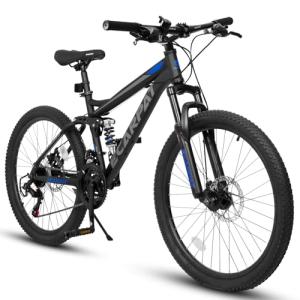
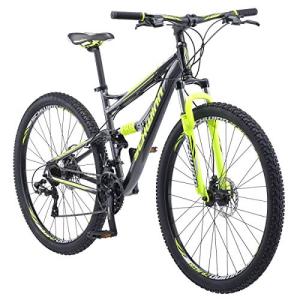
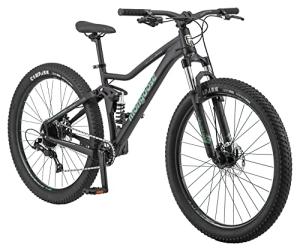
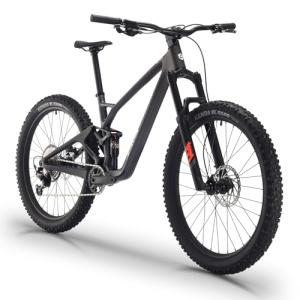
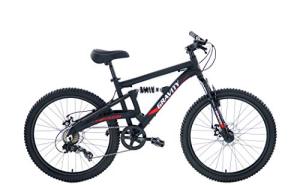
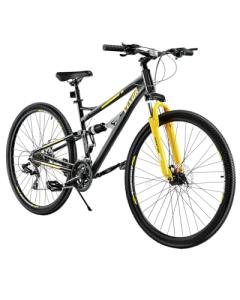
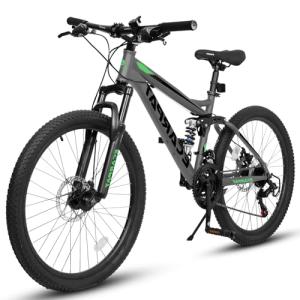
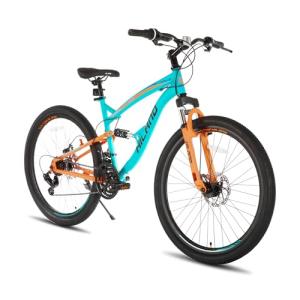
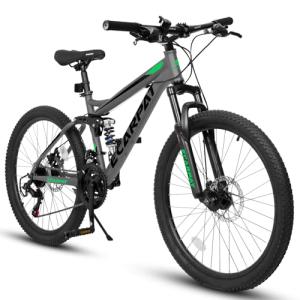
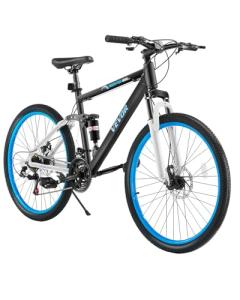
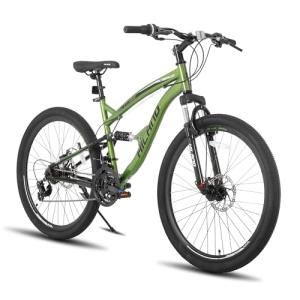
A full suspension mountain bike (often called a "full sus" or "dual suspension") has shock absorbers at both ends: a suspension fork up front and a rear shock connecting the rear triangle of the frame to the main chassis. Every time your wheel hits a rock, root, or drop, both ends of the bike absorb that impact instead of sending it straight through your hands and backside. The result is more traction, more control, more comfort, and — once you've ridden one — a very hard time going back.
Why Choose Full Suspension Over a Hardtail?
This is the first question most riders wrestle with, and the honest answer is: it depends on how and where you ride. But let's be clear — full suspension bikes have come a very long way. They used to be heavier, more sluggish on climbs, and harder to maintain. That's largely no longer true.
Modern full suspension designs are remarkably efficient. The rear suspension doesn't just soak up bumps on the way down — it keeps your rear wheel planted on the ground during climbs too, giving you traction on loose or technical ascents that a hardtail simply can't match. Even professional cross-country racers, who once swore by hardtails for their climbing efficiency, have largely switched to full suspension bikes because the technology has caught up.
Here's the honest breakdown of when full suspension makes sense:
You'll love full suspension if you:
- Ride technical singletrack with rocks, roots, drops, and rough terrain
- Want to ride longer without fatigue beating you up
- Are tackling descents that feel sketchy on a hardtail
- Want to build confidence faster on technical trails
- Value comfort and control over saving every last gram
A hardtail might suit you better if you:
- Ride mostly smooth trails or gravel paths
- Are on a tight budget and want the most bike for your money
- Prefer a simpler, lower-maintenance setup
- Are just starting out and want something forgiving to learn on
Understanding Suspension Travel
Suspension travel refers to how much your wheel can move up into the frame as the suspension compresses. It's measured in millimetres and is one of the most important numbers to understand when choosing a full suspension bike. More travel means the bike can absorb bigger hits — but it also tends to add weight and can make the bike feel more sluggish on smooth terrain or long climbs.
Short Travel — 100 to 120mm
These are the racing greyhounds of the full suspension world. Light, fast, and efficient, short travel bikes are built for riders who love to cover ground quickly. They're perfectly at home on cross-country trails and marathon events where every unnecessary gram counts. Don't let the modest travel numbers fool you — on the right terrain, a well-designed short travel bike is incredibly capable and genuinely fun. Brands like Trek, Specialized, and Scott have pushed short travel bikes to remarkable levels of performance.
Mid Travel — 130 to 150mm
This is where most riders end up, and for good reason. Mid travel trail bikes are the Swiss Army knives of the mountain bike world — capable enough to handle proper technical terrain, yet efficient enough to make the climbs enjoyable. If you're buying your first full suspension bike and you plan to ride a variety of trails, a 140mm trail bike is probably the safest landing spot. These bikes can handle drops, jump lines, chunky rock sections, and still pedal back up the hill without making you suffer.
Long Travel — 160 to 180mm+
Enduro bikes and downhill machines live in this territory. Long travel full suspension bikes are built for one thing above all else: going fast and staying in control on the gnarliest, most demanding trails on the planet. They're heavier and slower to pedal uphill, but when the trail points down and gets rough, they transform into something extraordinary. If you're riding aggressive enduro trails, hitting bike parks regularly, or just want maximum capability on steep technical descents, this is your category.
Frame Materials: Carbon vs Aluminium
Most full suspension bikes are built from either carbon fibre or aluminium, and each has real advantages worth considering.
Aluminium frames are tough, repairable, and considerably more affordable. A well-designed aluminium frame is stiff where it needs to be and offers great value. Don't let anyone tell you aluminium is inferior — plenty of elite riders absolutely shred on alloy frames, and for most recreational and intermediate riders, the difference in ride feel compared to carbon is genuinely small.
Carbon fibre frames are lighter, can be shaped more precisely for better stiffness-to-weight ratios, and often have a slightly more refined ride quality due to the way carbon can be tuned to dampen vibration. They're also more expensive and can crack rather than dent if they take a serious impact. At the top end of the market — think $5,000 and above — carbon becomes the standard. If budget allows and weight matters to you, it's worth the investment.
Wheel Sizes: 29er, 27.5, or Mullet?
Modern full suspension bikes almost exclusively use either 27.5-inch or 29-inch wheels. A handful of bikes run a "mullet" setup — 29-inch up front and 27.5-inch in the rear — which has become genuinely popular in the enduro world.
29-inch wheels roll over obstacles more easily, carry momentum better, and offer more traction due to a larger contact patch. They feel stable and planted, especially at speed. Taller riders (roughly 5'10" and above) tend to find 29ers feel most natural.
27.5-inch wheels are lighter, accelerate faster, and give the bike a more nimble, playful character. Smaller riders often prefer them because the geometry works out better at lower frame sizes. They're also still the go-to for many bike park and freeride riders.
Mullet setups try to capture the best of both: the rollover and traction of a big front wheel combined with the agility and clearance of a smaller rear wheel. Many enduro riders swear by this combination on technical, steep terrain.
Key Components to Look For
When you're comparing full suspension bikes at similar price points, the components spec can make a meaningful difference to how the bike actually rides and holds up over time.
Suspension forks and rear shocks — Brands like Fox, RockShox, and DVO make the majority of quality suspension components. Higher-end forks and shocks offer more adjustment, better small-bump sensitivity, and are easier to tune to your weight and riding style. Look for models with compression and rebound damping adjusters as a minimum.
Dropper seatpost — This is one of those components that, once you've ridden with it, you can never go back. A dropper post lets you lower your saddle at the push of a button while you're riding, getting the seat out of the way on technical descents so you can move freely on the bike. It's not a luxury — it's a fundamental tool for riding well.
Brakes — Hydraulic disc brakes are standard across all serious full suspension bikes. Look at the rotor size (larger rotors = more stopping power and better heat dissipation on long descents) and whether the calipers are two-piston or four-piston. For aggressive riding and heavier riders, four-piston brakes are noticeably more powerful and consistent.
Drivetrain — Most full suspension bikes run 1x drivetrains (a single chainring up front, wide-range cassette at the back). Shimano's SLX and XT groupsets offer excellent reliability and value; SRAM's GX Eagle and XX Eagle are popular competitors. Electronic shifting (Shimano Di2 or SRAM AXS) is increasingly common on higher-end builds and offers precise, consistent shifting with no cable stretch to worry about.
How Much Should You Spend?
Full suspension bikes carry a price premium over hardtails because of the additional engineering, linkage hardware, and rear shock involved. Here's a rough guide:
Under $2,000 — Entry-level full suspension. You'll find aluminium frames with entry-level components. Great for beginners who want to try the full suspension experience, but expect to upgrade components over time.
$2,000 to $4,000 — The sweet spot for most riders. This range delivers genuinely capable bikes with quality suspension components, reliable drivetrains, and good geometry. Many riders never need to spend more than this.
$4,000 to $8,000 — Performance territory. Carbon frames, premium suspension, and high-end drivetrains. These bikes are noticeably more capable and refined, and are appropriate for serious riders who are out on technical trails regularly.
$8,000 and above — This is where you're paying for the best of everything: top-tier carbon construction, race-spec suspension, electronic drivetrains, and the lightest components money can buy. For dedicated enthusiasts, racers, or anyone who simply wants the absolute best without compromise.
Getting the Right Size
This cannot be overstated: buying the wrong size full suspension bike will ruin the experience no matter how good the bike is. Riding a bike that's too small leaves you cramped, unstable, and unable to weight the bike properly through corners and technical sections. Too large and you'll struggle to control it, especially in tight, technical terrain.
Most brands publish detailed sizing guides and geometry charts. Use them. Better yet, if you have the option to demo a bike before buying, take it. Spending an hour on the right size — and the wrong size — will tell you everything you need to know.
The beauty of the modern full suspension market is that there really is something for everyone. Whether you're a weekend warrior looking to explore local trails more comfortably, a seasoned enduro racer chasing stage times, or someone returning to mountain biking after years away, a full suspension bike will almost certainly make your time on the trail more enjoyable. The technology has matured to the point where there are no real downsides left — just choices to be made about what kind of riding matters most to you.
Take your time, do your research, and if at all possible, get out and ride a few different options before committing. The right full suspension bike won't just get you down the trail — it'll make you want to go back and do it again, every single time.