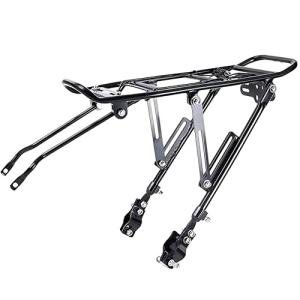
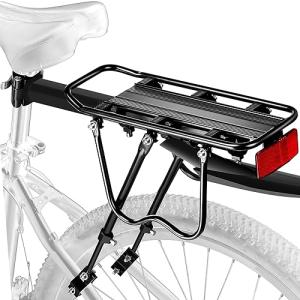
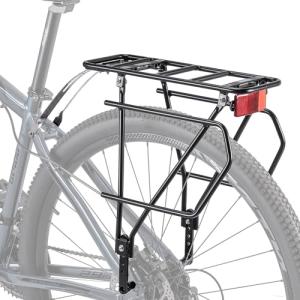
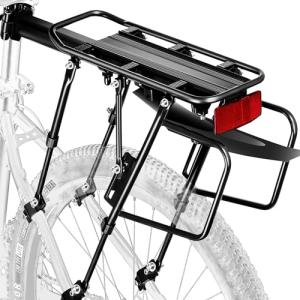
What Is a Bike Cargo Rack?
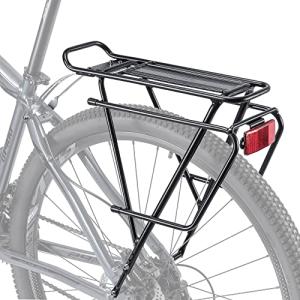
A bike cargo rack is a structural platform — typically made from aluminum or steel — that bolts onto your bicycle frame and gives you a stable surface to carry loads. Think of it as the foundation of your bike's carrying system. On its own, a rack lets you strap items directly to the platform. Paired with bags, baskets, or panniers, it becomes a genuinely versatile cargo solution.
Rear racks are usually rated to carry loads between 20 and 50 pounds, which covers the vast majority of everyday use cases. A handful of heavy-duty touring models can handle up to 80 pounds. That's an enormous amount of carrying capacity for something that adds very little bulk to the bike itself.
Rear Racks vs. Front Racks
Rear Cargo Racks
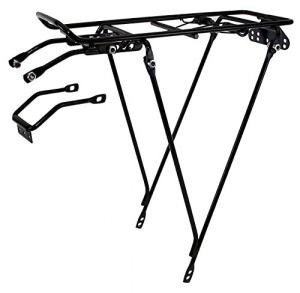
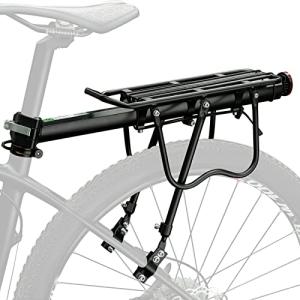
The rear rack is the most popular choice and the obvious starting point for most riders. It sits above the back wheel, attaches to the seat stays and seat tube of the frame, and offers a wide, flat platform for carrying gear. Steering is less affected when a bicycle is loaded at the back, so heavy packages are often best kept on rear racks. That said, if you load too much behind the rear axle, you can end up with a slightly wobbly feeling — which is why balancing the load and keeping it centered matters.
Rear racks are compatible with the full range of pannier bags, trunk bags, and basket attachments. They're the go-to for commuters, tourers, and anyone who needs reliable, daily cargo capacity without overthinking it.
Front Cargo Racks
Front racks get less attention, but they're worth considering — especially if you're already running a rear rack and need more space. Front racks are great for carrying all sorts and shapes of gear, and you'll always have your stuff easily accessible without getting off the bike. The tradeoff is that loading too much weight upfront can make steering feel heavier and require more effort through corners. Keep front rack loads lighter than your rear, and you'll notice it barely affects handling at all.
Front racks typically require a fork crown bolt hole for installation, so they're not universally compatible with every frame. Check before you buy.
Types of Bike Cargo Racks
Standard Bolt-On Racks
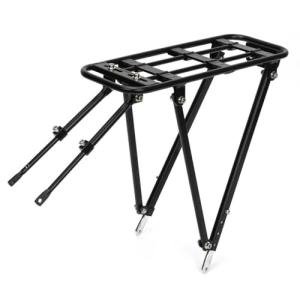
These are the classics — aluminum or steel platforms that bolt directly into threaded eyelets (also called braze-ons or mounting points) on your frame. Most bikes designed to be used with a rack have threaded eyelets on the frame for bolting a rack in place. If your bike frame doesn't have threaded eyelets, securing a rack will be more difficult.
Bolt-on racks are the most secure, most affordable, and most commonly available type. For commuter bikes, city bikes, touring bikes, and most hybrid bikes, this is exactly what you need.
Strut-Mount and Seatpost Racks
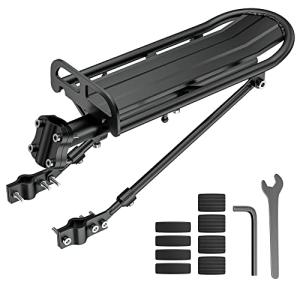
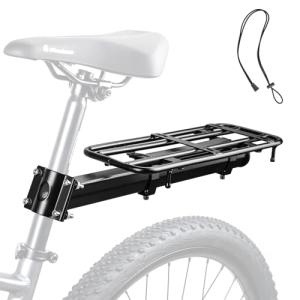
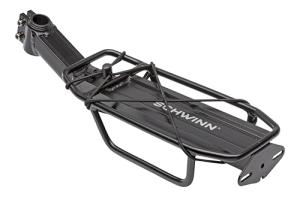
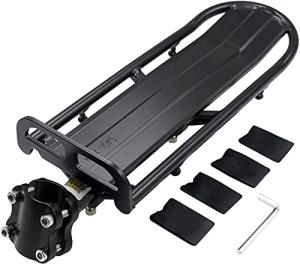
Not every bike has mounting eyelets, and that used to mean no rack at all. Strut-mount designs solve this with a clamping system that attaches to the seat stays or seatpost using rubber-padded clamps and ratcheting straps. They work well for lighter loads, though they generally can't match the payload capacity of a properly bolted rack.
Universal-Mount Racks
Universal-mount racks are a newer category that attaches to any bike without eyelets by mounting to a special axle, or sometimes seat stays or fork blades. The concept opens the door to reliable cargo space on bikes we already love to ride, from full-suspension mountain bikes to carbon road bikes. Brands like Old Man Mountain, Tailfin, and Aeroe helped popularize this category, and options continue to expand. They're typically pricier than conventional racks, but for riders on bikes that were never designed for cargo, they can be genuinely transformative.
Porteur and Cargo Racks
Porteur racks are wide, low-slung front platforms inspired by the French delivery cyclists who originally popularized them. They're built for carrying large, flat loads — think pizza boxes, crates, or panniers mounted low on the front fork. The largest rack is a true messenger rack that suits cargo haulers well; the big platform is the top choice if you often need to carry large objects, packages, banana boxes, or other oversized gear. These racks are especially popular on cargo bikes and urban utility builds.
Materials: Aluminum vs. Steel
Most racks you'll encounter are made from one of two materials, and the choice matters more than people often realize.
Aluminum racks are lightweight, resistant to rust, and widely available at a range of price points. Aluminum racks are a good choice for daily errands and lighter cargo loads — stylish and easy to live with. They're the practical choice for commuters who prioritize keeping their bike's overall weight down.
Steel racks are heavier but considerably more robust. Steel racks can carry up to 15 kg in weight, and quality stainless steel models can come with warranties of up to 30 years. If you're loading your bike down for multi-week touring or carrying genuinely heavy cargo on a regular basis, steel gives you a confidence that aluminum simply can't match at the same weight rating.
Stainless steel occupies a premium tier — it handles heavy loads, resists corrosion beautifully, and ages gracefully. Chromoly steel is another excellent option, offering strength without quite as much weight as standard steel alloys.
What to Carry: Bags, Panniers, and Baskets
A rack on its own is just the foundation. The real carrying system comes together when you pair it with the right bags.
Panniers
Named after the French word for baskets, panniers offer roomy storage, protection from weather, and the ability to quickly disconnect from the rack so you can take your gear with you. They hang from the sides of the rack using spring-loaded hooks, clips, or proprietary systems, and they're the most versatile cargo solution for serious loads.
By putting the weight low and on both sides of the rear wheel, panniers lower your bike's center of gravity, which gives great stability even when carrying heavy loads, making your ride feel more planted and secure. For grocery runs, touring, and commuting with a laptop and change of clothes, panniers are hard to beat.
Trunk Bags
Rack trunks are smaller than panniers but larger than seat bags, making them a useful middle ground for carrying extra clothing, bike tools, and lunch. Many have reinforced bases to retain their shape, and some even include integrated rain covers. They sit on top of the rack platform and are ideal when you want extra cargo space without the bulk of full panniers.
Baskets and Crates
Wire baskets, plastic crates, and wooden crates can all be mounted to a cargo rack and offer one significant advantage over bags: you can toss things in quickly without packing. They're a natural fit for grocery runs and urban errands. The tradeoff is that they offer no weather protection and require a cargo net or bungee cords to keep things from bouncing out on rough roads.
How to Choose the Right Rack
Know Your Frame
Before anything else, check whether your bike has rack-mounting eyelets. Most commuter bikes, touring bikes, and hybrid bikes do. Road bikes and mountain bikes often don't, though this has been changing as manufacturers increasingly add mounts. If your frame lacks eyelets, you'll need a strut-mount or universal-mount solution.
Match the Weight Rating to Your Needs
Standard racks typically handle between 35 and 50 pounds per load, which is ideal for road bikes and hybrid bikes. Heavy-duty options support up to 60 pounds, and ultra-heavy-duty racks designed for e-bikes and cargo bikes can handle over 100 pounds. Think about what you actually carry on a regular basis, add a buffer for heavier days, and choose accordingly.
Think About Tire Clearance
If you're riding wider tires — gravel, mountain, or fat bike rubber — make sure the rack you're looking at has enough clearance. Most standard racks are designed for road and hybrid tires. Racks sold as "29er" or "Plus" compatible will have the extra clearance needed for bigger rubber, and some even accommodate fenders alongside wider tires.
Consider Your Disc Brakes
If your bike has disc brakes, you'll want a rack specifically designed to accommodate them. The caliper position on disc-equipped bikes creates clearance issues with some older rack designs. Most modern racks account for this, but it's worth checking the product listing before purchasing.
Think About Bag Compatibility
Some racks use proprietary mounting systems that only work with that brand's bags. Others follow universal standards that work with panniers and accessories from any manufacturer. Unless you're building a fully integrated system from a single brand, you'll generally have more flexibility with a rack that uses standard side rails and a standard platform width.
Installation: What to Expect
Installing a rear rack typically takes between 15 and 30 minutes with basic tools. Most racks attach to the seat stays using the provided mounting bolts and to the seatpost or seat tube using a support strut. A few things to keep in mind:
Torque the bolts properly — too loose and the rack will rattle or shift under load; too tight and you risk damaging threads on an aluminum frame. Thread-locking compound (like Loctite) on the mounting bolts can help prevent loosening over time. Once installed, give the rack a firm wiggle before your first loaded ride to make sure everything is solid.
Who Are Bike Cargo Racks For?
The short answer is: almost everyone who rides a bike. The daily commuter who doesn't want a backpack. The parent picking up groceries on the way home. The weekend tourer doing a loaded camping trip. The urban cyclist building out a proper utility bike. Even the occasional rider who just wants the option to carry more when the situation calls for it.
Cargo racks have been the go-to solution for decades for anyone who wants to carry anything on a bike. They're simple, easy to pack, and secure. The fundamentals haven't changed, even as the options have multiplied. What has changed is that there's now a rack solution for virtually every bike and every riding style — from classic bolt-on aluminum rear racks to sophisticated universal-mount systems that work on bikes that were never designed to carry cargo at all.
Whatever your bike and whatever your load, there's a rack that fits. This category is your starting point.