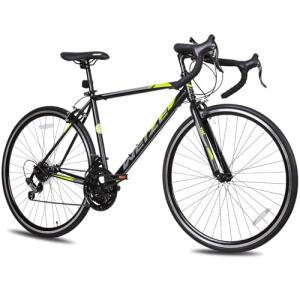
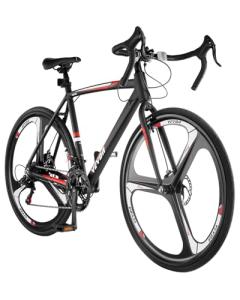
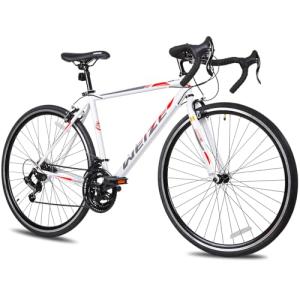
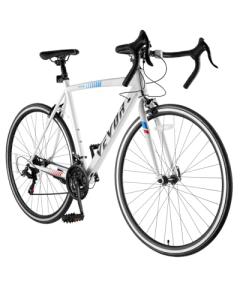
There's a strange paradox in the cycling world. Spend enough time around serious cyclists, and you'll start to believe that anything under $2,000 is basically a toy. But step outside that bubble — into the real world where people commute, chase fitness goals, and ride for the sheer pleasure of wind against their face — and a very different reality emerges. Most people don't need a $5,000 carbon superbike. They need something fast enough to be fun, light enough to not feel like punishment, and affordable enough to leave room in the budget for a decent helmet and a good pair of shorts.
Enter the Schwinn Phocus 1.6 Disc Road Bike.
This bike occupies a peculiar and fascinating niche: it's a brand-name road bike with genuine performance credentials — carbon fork, disc brakes, aerodynamic geometry — sold at a price point that undercuts most local bike shop entry-level offerings by hundreds of dollars. Whether that makes it a brilliant value proposition or a compromise machine depends entirely on who you are and what you expect. Let's break it all down.
Who Is This Bike Actually For?
Before diving into components and specs, it's worth stepping back and asking the most important question: who should be looking at this bike?
The Schwinn Phocus 1.6 Disc is designed for adults who want a legitimate road cycling experience without making a major financial commitment. It fits riders between 5'6" and 6'0" tall and rolls on standard 700c wheels — the same size used on professional racing bikes. It's available in a 52cm frame size, which puts it squarely in the medium range for most adult riders.
This is the right bike if you're a beginner who has never owned a road bike but wants to try the discipline. It's also well-suited for recreational fitness riders who want to cover 15 to 40 miles on paved roads a few times per week. Commuters who don't need rack and fender mounts will find it a fast, efficient way to get to work. And it serves as an honest platform for someone who wants to learn about bike mechanics, upgrades, and maintenance without risking damage to a premium machine.
Where it probably falls short: experienced riders looking for race-day performance, ultra-long-distance touring cyclists who need mounting points for gear, or anyone who regularly rides in extreme conditions where higher-end components would provide a meaningful safety or performance advantage.
The Frame — Schwinn's 6061 Aluminum Foundation
The backbone of the Phocus 1.6 is a 6061 aluminum frame, and this is where the bike earns real credibility. Aluminum 6061 is the same alloy family used in frames costing three or four times as much. It's lightweight, reasonably stiff, resistant to corrosion, and proven across decades of cycling use.
What Schwinn has done well here is keep the frame geometry aggressive enough to deliver an aerodynamic riding position without making it so extreme that casual riders feel cramped or uncomfortable. The drop from saddle to handlebars is moderate, allowing you to tuck in when you want speed while still sitting up comfortably on mellow rides.
The welds on the Phocus 1.6 aren't going to win beauty contests — this isn't a hand-brazed Italian stallion — but they're solid and consistent. Multiple owners have reported months and even years of regular use without any frame integrity issues, which speaks to the reliability of the construction.
One legitimate criticism: at roughly 32 pounds fully assembled according to Schwinn's own specs, the bike is on the heavier side for a road bike. For context, high-end aluminum road bikes typically weigh between 18 and 22 pounds, and even budget options from local bike shops often come in around 24 to 26 pounds. That extra weight is noticeable on climbs and during acceleration, though it matters far less on flat terrain and during steady-state cruising.
The Carbon Fork — A Genuine Surprise at This Price
Here's where things get interesting. The Phocus 1.6 ships with a carbon fiber fork and tapered steer tube. On a bike at this price point, a carbon fork is an unusually premium feature. Most competitors in the same bracket use aluminum or even steel forks, both of which are heavier and transmit more road vibration to the rider's hands and arms.
Carbon fiber is prized in cycling for its exceptional strength-to-weight ratio and its ability to dampen road buzz. On the Phocus 1.6, the carbon fork serves two important purposes: it shaves meaningful weight off the front end of the bike, and it delivers a noticeably smoother ride quality over rough pavement and chip seal surfaces.
The tapered steer tube — wider at the base and narrower at the top — adds steering precision and front-end stiffness. When you lean into a corner at speed, the bike tracks predictably and doesn't feel vague or wobbly. For a budget bike, that's a remarkably confidence-inspiring characteristic.
Many riders and reviewers have singled out this carbon fork as the standout feature of the entire package. It's the component that most separates the Phocus 1.6 from the sea of sub-$500 road bikes that cut corners in exactly this area.
16-Speed Drivetrain — Enough Gears for the Real World
The Phocus 1.6 runs a 16-speed drivetrain managed by integrated shifter and brake lever combos. This means you shift gears and brake using the same levers on the handlebars — a design standard on road bikes at every price point from entry-level to professional.
Sixteen speeds come from a 2x8 configuration: two chainrings up front and an eight-speed cassette in the rear. This gives you a reasonable gear range for most real-world riding scenarios. You'll have gears low enough to grind up moderate hills (though steep mountain grades may have you standing and suffering) and gears high enough to spin comfortably on flat roads and gentle downhills.
Shifting performance out of the box is, by most accounts, adequate but not flawless. This is common across virtually all bikes sold in a box, regardless of brand or price. The derailleurs on the Phocus 1.6 need adjustment — sometimes minor, sometimes significant — to deliver smooth, reliable shifting. If you're mechanically inclined or willing to watch a few YouTube tutorials, you can dial this in yourself within an hour. If not, a trip to a local bike shop for a basic tune-up (typically $50 to $75) is a worthwhile investment.
Once properly adjusted, the shifting on the Phocus 1.6 is smooth and predictable. It won't match the crisp, instantaneous snap of a Shimano 105 or SRAM Rival groupset, but for fitness riding and commuting, it performs reliably day after day.
Disc Brakes — The Feature That Changes Everything
For years, budget road bikes shipped exclusively with caliper rim brakes. The Phocus 1.6 breaks that mold by including front and rear alloy disc brakes, and this is a meaningful upgrade that affects everyday riding in ways most people don't anticipate until they experience it firsthand.
Disc brakes offer several tangible advantages over rim brakes. They provide more consistent stopping power in wet conditions — rain, puddles, dew-covered morning roads — where rim brakes can become dangerously unpredictable. They require less hand force to engage, reducing fatigue on longer rides. They don't wear out your wheel rims over time, extending the life of your wheelset. And they provide better modulation, meaning you can apply braking force more gradually and precisely.
The disc brakes on the Phocus 1.6 are mechanical (cable-actuated) rather than hydraulic. This means they're simpler to maintain and adjust at home, though they don't offer quite the same level of power and modulation as hydraulic systems. For the speeds and riding conditions this bike is designed for, mechanical discs are more than sufficient.
Some owners have reported initial brake squeal, which is common with new disc brake pads and rotors. A proper bedding-in procedure — a series of progressive stops from moderate speed — typically resolves this within the first few rides.
Wheels and Tires — The Rolling Stock
The Phocus 1.6 rolls on high-profile alloy wheels wrapped in 700c x 28c road tires. The 28mm width is a smart choice — it's wide enough to provide a forgiving ride over imperfect pavement without sacrificing the nimble, quick-rolling character that defines road bikes.
The alloy rims are double-walled, which adds strength and durability. They may need truing out of the box (another common issue with boxed bikes), but once properly tensioned, they hold up well to daily riding.
The stock tires are serviceable but won't inspire poetry. They roll reasonably well on dry pavement but can feel sketchy in wet conditions. Replacing them with a set of quality tires from Continental, Vittoria, or Schwalbe is one of the most impactful upgrades you can make to this bike, typically costing between $40 and $70 for a pair.
Ergonomics and Riding Position
Schwinn has equipped the Phocus 1.6 with an ergonomic aluminum handlebar and stem that position the rider in what the company describes as an aerodynamic riding posture. In practice, the geometry delivers a forward-leaning position that reduces wind resistance while keeping the rider's weight distributed between the handlebars and saddle in a balanced, sustainable way.
The drop bar design offers multiple hand positions: on the tops for relaxed cruising, on the hoods for moderate effort, and in the drops for full-on sprinting or headwind battles. This versatility is one of the fundamental advantages of road bikes over flat-bar alternatives, and the Phocus 1.6 executes it well.
The stock saddle is, like most stock saddles on bikes at every price point, a matter of personal anatomy. Some riders find it perfectly comfortable for rides up to 30 miles; others want to swap it within the first week. This is normal and expected — saddle fit is one of the most individual aspects of cycling.
Assembly, Setup, and the Out-of-Box Experience
Let's address the elephant in the room: this bike ships in a box, partially disassembled, and you're responsible for putting it together. Schwinn includes an instruction guide, and the process requires only basic household tools — Allen keys, a screwdriver, an adjustable wrench.
For someone with moderate mechanical aptitude, assembly takes 45 minutes to two hours. The wheels, handlebars, pedals, front brake, and seat need to be installed and adjusted. The critical steps are setting the headset preload (so the steering doesn't wobble), aligning the brake calipers with the rotors, and adjusting the derailleurs so shifting works properly.
For those who aren't comfortable working on bikes, the unanimous advice from the cycling community is clear: take it to a local bike shop. Professional assembly and tuning typically runs $75 to $125, and it ensures everything is properly torqued, aligned, and adjusted from day one. Consider it part of the purchase price.
How the Schwinn Phocus 1.6 Stacks Up Against the Competition
No bike exists in a vacuum. Here's how the Phocus 1.6 compares to its closest competitors in the entry-level road bike market:
| Feature | Schwinn Phocus 1.6 Disc | Vilano R2 Commuter | Eurobike XC550 | Schwinn Phocus 1400 | Hiland Road Bike |
|---|---|---|---|---|---|
| Frame Material | 6061 Aluminum | 6061 Aluminum | Aluminum | 6061 Aluminum | Aluminum |
| Fork | Carbon Fiber | Steel | Steel | Alloy | Steel |
| Speeds | 16 (2x8) | 21 (3x7) | 21 (3x7) | 14 (2x7) | 14 (2x7) |
| Brakes | Mechanical Disc | Dual-Pivot Caliper | Disc (Mechanical) | Caliper | Caliper |
| Wheel Size | 700c | 700c | 700c | 700c | 700c |
| Tire Width | 28mm | 25mm | 28mm | 28mm | 25mm |
| Shifter Type | Integrated STI | Thumb Shifters | Integrated STI | Integrated STI | Integrated STI |
| Weight (approx.) | ~32 lbs | ~25 lbs | ~28 lbs | ~28 lbs | ~26 lbs |
| Rider Height | 5'6" – 6'0" | 5'4" – 6'1" | 5'5" – 6'0" | 5'6" – 6'0" | 5'6" – 6'0" |
| Key Advantage | Carbon fork + disc brakes | Budget-friendly, lighter | Looks premium for the price | Lower cost entry to Schwinn | Shimano drivetrain components |
| Key Weakness | Heavier than competitors | Rim brakes, separate shifters | Build quality concerns | No disc brakes | No disc brakes, steel fork |
What This Table Tells Us
The Schwinn Phocus 1.6 Disc stands out in two critical areas: it's the only bike in this comparison that offers both a carbon fiber fork and disc brakes. Those two features alone represent a significant engineering and safety advantage that the competition simply doesn't match at a similar price.
Where the Phocus 1.6 gives ground is weight. At roughly 32 pounds, it's the heaviest bike in this group by a noticeable margin. The Vilano R2, despite its steel fork and lower-tier components, weighs about seven pounds less. For riders who prioritize acceleration and climbing, that's a real consideration.
The gear count difference (16 speeds vs. 21 speeds on the Vilano and Eurobike) is less meaningful than it appears. The triple chainring setup on 21-speed bikes provides more overlap and redundancy in gear ratios rather than a meaningfully wider range. The Phocus 1.6's 2x8 setup is cleaner, simpler to maintain, and covers the gear range most riders actually use.
Long-Term Ownership — What to Expect Over Time
The Phocus 1.6 is a bike that rewards investment — both in initial setup and in gradual upgrades. Here's a realistic timeline of what ownership looks like:
During the first month, you'll be dialing in fit and comfort. Adjust saddle height, handlebar angle, and brake lever reach. Bed in the disc brake pads. Expect to tighten a few bolts that settled during shipping. This is the period where the bike transitions from a product to your bike.
Between months two and six, you'll develop a feel for what you want to upgrade first. For most riders, tires are the highest-impact improvement. Better rubber transforms grip, rolling resistance, and ride quality. A comfortable saddle that fits your anatomy is a close second. These two upgrades, costing under $100 total, can make the Phocus 1.6 feel like a substantially more expensive machine.
From six months onward, riders who catch the cycling bug often start thinking about drivetrain upgrades — a better cassette, smoother chain, or even a groupset swap. The Phocus 1.6's aluminum frame and carbon fork serve as a capable foundation for these improvements, giving the bike a second life as a genuinely capable road machine.
This upgrade path is one of the hidden strengths of the Phocus 1.6. Rather than buying a cheap bike that needs to be replaced entirely when you outgrow it, you're buying a frame and fork package that can grow with you.
The Schwinn Brand — Heritage Meets Modern Reality
Schwinn occupies a complicated space in cycling. Founded in Chicago in 1895, the company built some of the most iconic American bicycles of the 20th century. The Varsity, the Continental, the Paramount — these were bikes that defined generations of riders.
Today's Schwinn is a different entity. The brand is now owned by Pacific Cycle (a subsidiary of Dorel Industries), and most of their bikes are manufactured overseas. The quality has become inconsistent — some products feel like genuine efforts to carry the Schwinn legacy forward, while others are clearly volume-driven department store fare.
The Phocus line falls firmly in the former category. It's clear that actual cycling knowledge went into the spec sheet. The carbon fork isn't a gimmick. The disc brakes aren't marketing fluff. The geometry is genuinely road-oriented. And the limited lifetime warranty — covering the frame and fork for as long as you own the bike — signals real confidence in the product.
The Verdict — Should You Buy the Schwinn Phocus 1.6 Disc?
The Schwinn Phocus 1.6 Disc Road Bike is not a perfect bicycle. It's heavier than it should be. The stock tires are mediocre. The components need adjustment out of the box. And the assembly process will intimidate anyone who has never worked on a bike before.
But here's the thing: every road bike under $1,000 has compromises. The question isn't whether compromises exist — it's whether the right compromises were made. And on that front, Schwinn got the important things right.
The carbon fork delivers genuine ride quality benefits. The disc brakes provide all-weather stopping confidence. The 6061 aluminum frame is a durable, capable platform. The geometry puts you in a real road riding position. And the overall package is backed by one of the most recognized names in American cycling history.
For beginners stepping into road cycling, fitness riders looking for an efficient workout machine, and commuters who want speed without spending a mortgage payment, the Phocus 1.6 Disc delivers where it matters most. It's a bike that respects both your ambitions and your budget — and in 2026, that combination is harder to find than you might think.
Check the latest price on Amazon
Key Specifications at a Glance
- Frame: 6061 Aluminum, road geometry
- Fork: Carbon fiber with tapered steer tube
- Speeds: 16 (2x8 drivetrain)
- Shifters: Integrated shifter/brake lever combo
- Brakes: Front and rear mechanical disc brakes
- Wheels: High-profile alloy, 700c
- Tires: 700c x 28mm road tires
- Handlebar: Ergonomic aluminum drop bar
- Rider Height: 5'6" to 6'0"
- Weight: Approximately 32 lbs
- Warranty: Limited lifetime (frame and fork)