Design and First Impressions
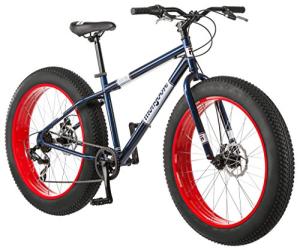
Pull the Dolomite out of the box and the first thing you'll notice is the color. The Light Blue finish is genuinely striking — not garish, not timid, but confidently cool. Mongoose's color options, including light blue, have received many compliments from owners, and it's easy to see why. The paint is applied cleanly, the frame lines are angular and purposeful, and the whole thing reads as a machine that means business.
The frame itself is alloy steel — a material choice that gets a bad rap from weight-conscious cyclists, but one that delivers real-world advantages for this category of bike. The threadless headset and alloy rims keep things reasonably light for a steel-framed fat bike, striking a balance between durability and manageability that aluminum alone doesn't always achieve at this price point. Steel flexes rather than cracks under impact, which matters enormously when you're rolling over roots, rocks, and frozen ground.
The overall geometry is upright and confident — wide bars, a relaxed head angle, and a frame position that lets you see what's ahead rather than staring down at your stem. It's a design that signals off-road intent while remaining comfortable enough for longer rides.
The Tires: Where the Dolomite Earns Its Name
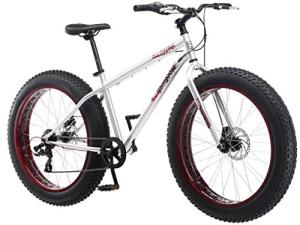
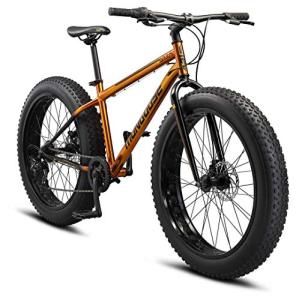
Everything about the Dolomite revolves around those tires. Four inches wide, knobby, aggressive, and wrapped around 26-inch wheels, they are the defining feature — and rightly so. The 26" x 4" all-terrain knobby fat tires provide excellent traction in diverse conditions like sand and snow, and that's not marketing language — it's a functional description of what happens when you throw this bike at terrain that would stop most mountain bikes cold.
Fat tires work by distributing your weight over a dramatically larger contact patch. Where a standard 2-inch mountain bike tire concentrates force on a narrow strip of ground, the Dolomite's four-inch tires spread that load across a surface almost twice as wide. The result is grip that feels almost implausible. Sand that swallows a narrower tire becomes manageable. Snow, which turns regular trails into skating rinks, is handled with relative composure. Muddy fire roads that would send a hardtail sideways become tractable surfaces.
The superior traction of the 26" x 4" all-terrain knobby fat tires performs across diverse conditions — and riders who've taken the Dolomite to the beach, through winter slush, or across loose gravel consistently report the same thing: the tires just work. One longtime rider put it plainly — he ran the tires at around 22 PSI on firm ground and found the bike responsive and easy to pedal, dropping pressure for softer surfaces and letting the tire do its job.
A word on tire pressure: fat bike tires are highly sensitive to inflation. At higher pressure, the ride firms up and rolling resistance drops significantly. Drop that pressure for sand or snow, and the tire deforms around obstacles, increasing grip at the cost of some effort. Learning this pressure curve is part of getting the most from the Dolomite, and it rewards the rider who takes a few minutes to experiment.
Frame and Build Quality
The steel mountain frame is built for rugged riding out on the trail, and that's a claim backed up by consistent real-world use. The frame handles significant rider weight without complaint — the maximum weight recommendation is 301 pounds, making the Dolomite a genuinely practical option for heavier riders who are often underserved by entry-level mountain bikes.
The 3-piece crank adds meaningful durability to the drivetrain. Unlike cheaper one-piece cranks that can flex under load, a 3-piece crank transfers power more efficiently and holds up better over time, particularly when riders are putting down real effort on inclines or technical terrain. It's a detail that speaks well of Mongoose's engineering priorities.
Strong, lightweight alloy rims keep the weight down while contributing to enhanced speed and overall performance. They're also drilled — a design choice that reduces rotational weight (the hardest kind to overcome when accelerating) while maintaining structural integrity. Riders who've upgraded the stock tires report that the rims hold up well to the process, a positive indicator of their overall quality.
Assembly arrives at 80 percent complete. You'll need basic tools — a Phillips screwdriver, Allen wrenches from 2.5 to 8mm, an adjustable wrench, and pliers — with assembly taking about 30 minutes. Most reviewers found this straightforward, though the brake adjustment in particular benefits from a careful first setup. Front wheel installation requires attention to the disc rotor clearance within the caliper — take your time here and the brakes will reward you with reliable, confident stopping.
The 7-Speed Drivetrain
Use the 7-speed drivetrain's twist shifter to tackle changing terrain with ease. That's the pitch, and for the Dolomite's intended riding environment, it holds up. Seven speeds is a configuration that divides opinion among cyclists, with more experienced riders often wanting more range. But for the terrain this bike is built for — trails, beaches, neighborhood riding, winter commuting, moderate hills — seven gears covers the spread adequately.
The Shimano Tourney rear derailleur is a workhorse component found on millions of entry-level bikes worldwide. It shifts reliably when properly adjusted and responds well to maintenance. The twist-grip shifter takes some getting used to if you're accustomed to trigger shifters, but it's intuitive enough that new riders pick it up quickly. With 7 speeds and twist shifters, the bike rides light and could handle uphill trails — particularly useful given the added rolling resistance of fat tires.
One upgrade many owners pursue early is a rear cog swap — moving to a larger cassette for improved climbing performance on steeper terrain. It's a relatively inexpensive modification that extends the bike's versatility considerably, particularly for riders in hilly areas.
Braking: Mechanical Disc Front and Rear
Mechanical disc brakes deliver all-condition stopping power — front and rear. This is a significant specification for a bike at this price point. Disc brakes outperform rim brakes in wet conditions, in mud, and on sustained descents where heat buildup can fade rim-brake performance. For a bike designed to ride in rain, snow, and loose terrain, disc brakes aren't a luxury — they're a necessity.
The mechanical setup (as opposed to hydraulic) means the brakes are actuated by cables rather than fluid. This makes them slightly less powerful than hydraulic systems, but considerably easier and cheaper to maintain. Cable adjustment, pad replacement, and rotor inspection are all straightforward tasks that most riders can handle at home with basic tools.
Initial setup requires attention to rotor centering within the caliper. Riders who take this step carefully — and re-check it after the first few rides as cables stretch in — report the brakes to be effective and confidence-inspiring. A number of riders found the mechanical disc brakes to be effective, particularly in the wet conditions where the Dolomite earns much of its use.
Comfort and Rider Fit
Ideal for riders between 5'4" and 6' tall, the threadless headset is adjustable for riders of different heights, increasing speed and performance. The adjustable headset is a practical inclusion — it means the cockpit can be dialed in to suit different riding styles and body proportions without requiring new parts.
The beach cruiser pedals are a nod to the Dolomite's dual-purpose character. Wide and flat, they offer good platform grip for casual riding shoes without demanding clipless pedals or cycling-specific footwear. Riders who take the bike to more aggressive terrain often swap these for platform pedals with more grip pins, but for general use they're comfortable and functional.
The saddle is the one component that draws consistent suggestions for upgrade. It's serviceable out of the box, but riders logging serious miles often find it lacking in padding and ergonomic support. A replacement saddle is a $30 to $60 investment that pays dividends immediately in comfort — and it's one of the easiest modifications on any bike.
The riding position is upright and visibility is excellent, which matters both on trails (where you need to read terrain ahead) and in urban environments. The riding position was nice and upright, improving control and visibility — something first-time mountain bikers in particular appreciate.
Who Is This Bike For?
The Dolomite has found its audience across a surprisingly wide demographic. For cyclists who usually found themselves winding down in the off-season, the Dolomite allowed them to keep up commuting and exercise in snowy and muddy conditions — which is perhaps the single most compelling use case for any fat bike. Where conventional mountain bikes get hung up on ice and bog down in deep snow, the Dolomite rolls through.
It works equally well for beach riders, trail explorers, fitness commuters in wetter climates, and heavier riders for whom most entry-level bikes simply aren't engineered. It wasn't unusual to find riders that bought this bike as a project-base, with upgrade-ability of the Dolomite being a fun factor for experienced cyclists who wanted an inexpensive platform to customize.
What it is not: a high-performance cross-country race bike. The steel frame and fat tires carry weight, and that weight is felt on sustained climbs. This is a bike that rewards patience and rewards terrain over speed. Riders coming from lightweight hardtails need to recalibrate their expectations, and when they do, they often find the Dolomite considerably more enjoyable than anticipated.
Mongoose Dolomite vs. Key Competitors
| Feature | Mongoose Dolomite (Light Blue) | Schwinn Bonafide | Mongoose Malus | Schwinn Traxion |
|---|---|---|---|---|
| Frame Material | Alloy Steel | Aluminum | Alloy Steel | Aluminum |
| Wheel Size | 26 inches | 29 inches | 26 inches | 29 inches |
| Tire Width | 4 inches (Fat) | 2.25 inches | 4 inches (Fat) | 2.25 inches |
| Speeds | 7 | 24 | 7 | 24 |
| Suspension | Rigid | Front Fork | Rigid | Full Suspension |
| Brakes | Mechanical Disc (F+R) | Disc | Mechanical Disc (F+R) | Mechanical Disc |
| Weight Capacity | 301 lbs | 300 lbs | 400+ lbs | 320 lbs |
| Rider Height | 5'4"–6'0" | 5'4"–6'2" | 5'5"–6'2" | 5'4"–6'2" |
| Terrain Focus | Sand, Snow, Trails | Trail / All-Terrain | Sand, Snow, Trails | Trail / All-Terrain |
| Shifter Type | Twist Grip | Trigger | Twist Grip | Trigger |
| Assembly | 80% assembled | Partial | 80% assembled | Partial |
| Best For | Fat-tire beginners, off-season riders | Versatile trail riding | Heavier riders | Technical trail riders |
The table tells a clear story. The Dolomite is the pick for riders who specifically want the fat-tire experience — the traction, the stability, the ability to ride surfaces that defeat narrower bikes. The Schwinn Traxion brings full suspension and more gears, but trades the fat-tire advantage for a more conventional trail profile. The Mongoose Malus is the Dolomite's heavier-duty sibling for riders needing higher weight capacity. For the broadest combination of fat-tire capability, value, and visual appeal, the Dolomite in Light Blue holds its own convincingly.
Maintenance Notes and First-Ride Setup
The bike often came with minimal or no grease, leaving it up to the buyer to disassemble and lubricate the bottom bracket and hubs — this is the one consistent criticism across owner reviews and it's worth noting clearly. Before the first ride, it pays to spend 20 minutes checking bearing grease on the hubs and bottom bracket. It's not a dealbreaker, and it's a common quality-control gap across budget bikes from multiple manufacturers, but addressing it early will significantly extend component life.
Chain lubrication is the other first-ride recommendation. The stock chain often arrives with minimal factory lubricant. A proper wet or dry lube application before riding makes a noticeable difference in shifting smoothness and chain longevity. With those two steps completed, the Dolomite rides well out of the gate.
In Short
The Mongoose Dolomite Fat Tire Mountain Bike in Light Blue is one of the most honest value propositions in the entry-level cycling market. It doesn't pretend to be a $1,500 trail weapon. It is what it is: a capable, fun, genuinely versatile fat bike that handles terrain most bikes can't, carries a higher weight capacity than most comparable options, and looks excellent doing it.
It suits riders who want maximum stability without fuss — and if you're tired of wheels going out of true or frames creaking under load, the Dolomite just works. For first-time fat bike riders, off-season commuters, beach enthusiasts, and anyone who wants to keep riding when the weather turns ugly, it delivers on its core promise with room to spare. The Light Blue colorway elevates it from utilitarian to genuinely covetable — and that's a combination worth pedaling toward.