The Fat Tire Bike That Refuses to Be Ignored
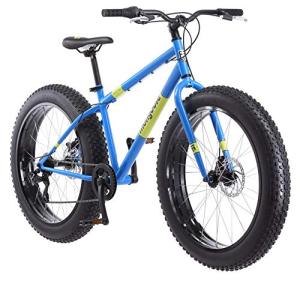
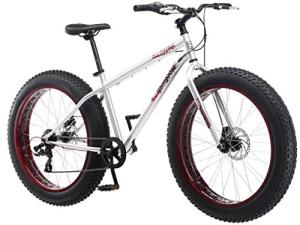
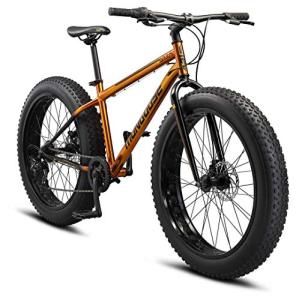
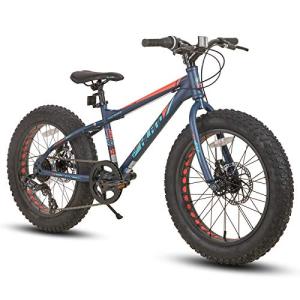
There are bikes you ride, and then there are bikes that make people stop and stare. The Mongoose Dolomite falls firmly in the second category. With its navy blue body and 4.25-inch wide red rims, spotting a Dolomite from across a trail is unmistakable — it is the kind of machine that makes your brother say you didn't buy a bike, you bought a monster truck. That reaction is entirely appropriate. This is not a bike for blending in.
The Dolomite has built a loyal following since it first appeared as an accessible entry point into the fat tire world, and it continues to be one of the most recognizable value-priced fat bikes on the market. But looks alone don't explain why it keeps selling. To understand why riders keep coming back to it, you have to look at what it actually does — and what it does remarkably well for its price point.
Built for the Terrain Most Bikes Avoid
The Mongoose Dolomite was designed to be ridden hard — on sand, snow, and rugged trails — and the steel mountain frame is built from the ground up for exactly that kind of abuse. While lightweight aluminum frames dominate higher-end fat bikes, the Dolomite's steel construction gives it a particular kind of solidity that riders in demanding environments appreciate. It flexes slightly under stress rather than cracking, and it handles aggressive terrain without creaking or rattling itself apart.
The bike is ideal for riders between 5'4" and 6' tall, with 26-inch wheels and supersized knobby tires allowing for confident control across any off-road trail. That range covers the vast majority of adult riders, making this a genuinely versatile machine that doesn't require a custom fit to feel right.
The 26" x 4" all-terrain knobby fat tires provide excellent traction in sand and snow, delivering stopping power and grip where standard mountain bike tires simply give up. Low tire pressure — as low as 8 to 13 PSI — transforms the ride quality dramatically, cushioning impacts and providing that characteristic float that fat tire bikes are known for. Riders who have experimented with air pressure report that pumping the tires up to around 22 PSI significantly reduces rolling resistance and makes pedaling easier, while dropping closer to 8 PSI delivers a softer, more cushioned ride that is ideal for loose or uneven surfaces.
The Drivetrain: Seven Speeds That Do Real Work
One of the Dolomite's most practical upgrades over its simpler siblings in the Mongoose lineup is its 7-speed drivetrain. A rear derailleur with seven speeds makes hills easier to climb and allows smooth, easy gear changes while riding — paired with a 1x7 drivetrain setup that optimizes power transfer across changing terrain.
The twist shifter is the mechanism here, not trigger shifters, which is a common point of discussion among riders who arrive from more performance-oriented backgrounds. Some riders plan to swap out the grip shifter for a trigger shifter assembly, finding thumb and finger levers more intuitive for technical riding. That said, the twist shifter works reliably for the casual to intermediate rider who makes up the core of this bike's audience. It's simple, easy to learn, and requires minimal adjustment.
The Shimano drivetrain, combined with twist shifters, makes the Dolomite ride lighter than its weight suggests and capable of handling uphill trails with reasonable effort. Riders in hilly terrain sometimes note that the gear range runs slightly high for steep climbs, and a megarange cassette upgrade — available for around $20 — can open up those lower gears for serious ascents without significant expense.
Stopping Power That Earns Trust
Where the Dolomite earns particular respect is in its braking setup. Dual disc brakes provide all-condition braking performance, and that matters enormously when you're coming down a wet hillside or navigating loose gravel at speed. Mechanical disc brakes are not the hydraulic systems found on premium bikes, but they are predictable, easy to adjust, and more effective than rim brakes in wet or muddy conditions.
A number of riders have found the mechanical disc brakes to be genuinely effective once properly aligned and adjusted after assembly. The key word is "adjusted" — like any entry-level bike, the Dolomite benefits from a once-over before the first ride. Brake alignment in particular takes only a few minutes to dial in and pays dividends every time you reach for the levers on a fast descent.
The Frame: Steel Has a Certain Honesty
There is a reason experienced mechanics say steel is real. The Dolomite's frame is a lightweight steel alloy that earned many compliments for its paint quality and overall appearance across multiple color options including red, navy, and light blue. Steel frames are heavier than aluminum counterparts, but they are also easier to repair, more resistant to catastrophic failure, and — in the opinion of many riders — deliver a more planted, stable ride feel at lower speeds.
The maximum weight recommendation sits at 301 pounds, which is a genuinely high capacity that makes the Dolomite accessible to a much wider range of adult riders than many bikes in this category. Riders at 260 pounds report that the bike handles their weight perfectly, and the steel frame's integrity under load is a consistent point of praise.
The 17-inch medium frame is the standard configuration, and the threadless headset is adjustable for riders of different heights, allowing handlebar position to be fine-tuned for comfort without requiring specialized tools. Combined with a quick-release seat post, getting the fit right is a matter of minutes rather than a trip to the bike shop.
Assembly: What to Expect Out of the Box
The Dolomite arrives approximately 80% assembled, and completing the build requires a Phillips head screwdriver, 2.5–8mm Allen wrench, adjustable wrench, and a pair of pliers. Most riders with any mechanical confidence can finish the assembly in under an hour. The major steps involve attaching the front wheel, setting handlebar angle, installing the pedals (which require grease on the threads), and adjusting seat height.
One rider's assembly experience involved 45 minutes total, with no missing parts and all required tools on hand. Others note that brake and gear adjustments after assembly are effectively mandatory — not because the components are poor, but because shipping inevitably shifts cable tension and wheel alignment. Treating initial assembly as a two-stage process — first build, then adjust — leads to the best experience.
The one consistent maintenance note from experienced buyers is that the bike often ships with minimal lubrication on the bottom bracket and hubs, making disassembly and greasing those components a recommended early step for riders who want the smoothest possible performance from day one.
Who Actually Buys This Bike — And Why
The Dolomite attracts a surprisingly diverse crowd. There are commuters who want a bike that handles winter roads without slipping. There are beach riders who want to cruise the shoreline without sinking into soft sand. There are casual trail riders who want something more capable than a standard hardtail but aren't ready to spend four figures.
For cyclists who typically wound down in the off-season, the Dolomite allowed them to keep up their commuting and exercise routines through snowy and muddy conditions. That year-round utility is one of the strongest arguments for the fat tire format in general, and the Dolomite delivers it at a price that most people can justify without significant deliberation.
It wasn't unusual to find riders who bought this bike as a project base, with the upgrade-ability of the Dolomite serving as a genuine draw for mechanically-minded buyers. Entry-level Shimano components, steel frame, and standard sizing mean that nearly every part can be swapped out incrementally as budget and ambition allow. Start with a megarange cassette, upgrade to better tires, replace the saddle — the Dolomite accepts modifications graciously and rewards investment in components.
The Honest Trade-Offs
No bike at this price point is without compromise, and the Dolomite is refreshingly consistent about where those compromises live.
The steel frame makes the Dolomite heavier than more expensive aluminum fat bikes, and that weight is noticeable when carrying the bike upstairs or loading it onto a rack. On the trail, rolling resistance from the oversized tires is the primary physical demand — but that is the nature of the fat tire format regardless of price point.
The stock tires and tubes that come on the bike are on the heavier side, and riders seeking a lighter, more performance-oriented feel sometimes replace them with aftermarket fat bike tires early on. The difference in ride quality can be significant, though the stock tires perform well for casual use.
The componentry throughout is entry-level, and some buyers have experienced issues with specific parts — particularly around the bottom bracket and hubs before lubrication. Going over the bike carefully before the first ride, tightening all bolts, and greasing bearing surfaces is the single most effective way to sidestep the issues that generate negative reviews.
Comparison: Mongoose Dolomite vs. Key Competitors
| Feature | Mongoose Dolomite | Mongoose Beast | Schwinn Traxion 29" | Framed Minnesota 2.0 |
|---|---|---|---|---|
| Frame Material | Steel alloy | Steel | Aluminum | Aluminum |
| Wheel Size | 26" | 26" | 29" | 26" |
| Tire Width | 4 inches | 4 inches | Standard MTB | 4 inches |
| Speeds | 7 | Single speed | 24 | 9 |
| Brakes | Mechanical disc | V-brake/rim | Mechanical disc | Hydraulic disc |
| Suspension | Rigid | Rigid | Full suspension | Rigid |
| Max Rider Weight | 301 lbs | 250 lbs | 250 lbs | 300 lbs |
| Assembly Required | ~80% built | ~80% built | ~85% built | ~80% built |
| Price Range | Budget–Mid | Budget | Mid | Mid–High |
| Best For | All-terrain casual/trail | Neighborhood cruising | Trail + suspension | Performance fat riding |
The Dolomite sits in a clear sweet spot: more capable than the single-speed Beast with its 7-speed drivetrain and disc brakes, more accessible in price than the Framed Minnesota 2.0 with its hydraulic stopping power, and offering fat tire versatility that a standard mountain bike like the Schwinn Traxion simply can't match on loose terrain.
The Mongoose Dolomite is not a replacement for a $1,200 fat bike — and it was never meant to be. What it is, consistently and reliably, is a well-designed entry point into fat tire riding that delivers genuine capability at a price that most people can access.
The blue-and-red colorway is more than cosmetic. It signals a kind of intent — this is a bike that wants to be noticed, wants to be ridden hard, and isn't particularly concerned with blending in. Riders consistently remark that the massive wheels make it easy to traverse areas where regular bikes simply cannot go, and that capability — the ability to roll confidently through sand, snow, mud, and gravel without flinching — is the heart of what the Dolomite offers.
For the rider who wants a capable, characterful fat tire bike that can handle a wide range of terrain, accept modifications as your skills and budget grow, and draw attention at every trailhead — the Mongoose Dolomite delivers exactly what it promises.
→ View the Mongoose Dolomite on Amazon