The Main Types of Bike Racks
Understanding the four main rack styles is the first step toward making a smart purchase. Each one has a different set of trade-offs, and what works great for your neighbor's sedan might be completely wrong for your crew-cab truck.
Hitch-Mounted Racks
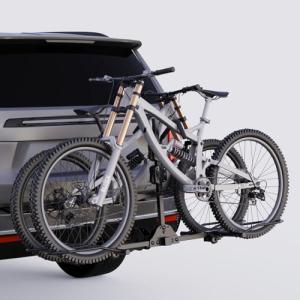
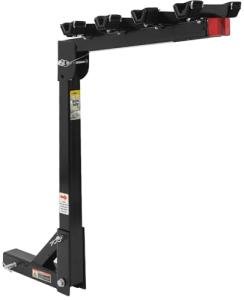
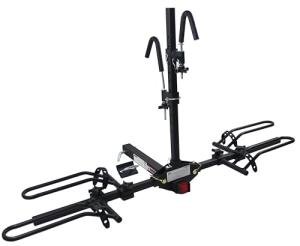
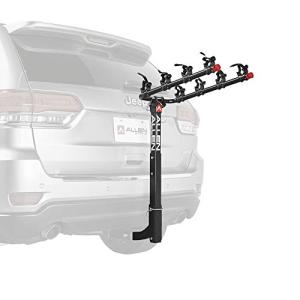
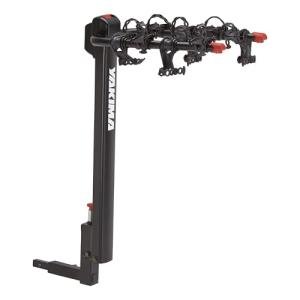
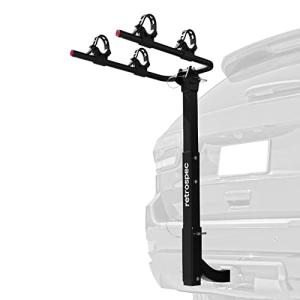
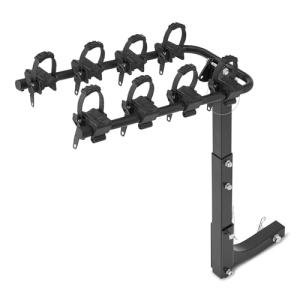
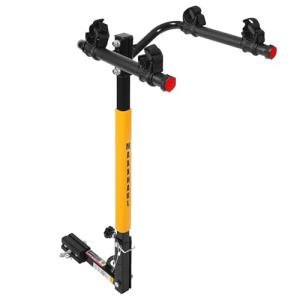
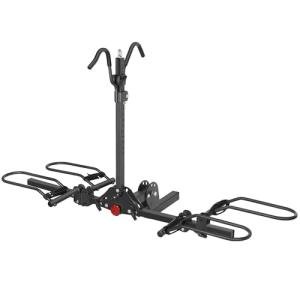
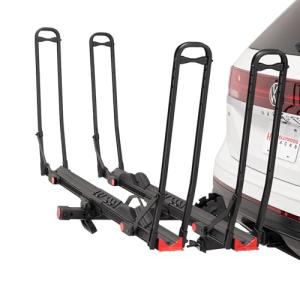
Hitch racks are the most popular option on the market, and for good reason. They slide into your vehicle's trailer hitch receiver and come in two main flavors: platform (also called tray-style) and hanging.
Platform hitch racks cradle each bike from below by supporting the wheels in a tray. Bikes don't touch each other, don't swing around, and there's no frame contact at all on the better models. This makes them ideal for carbon fiber frames, full-suspension mountain bikes, and heavy e-bikes. They're also much easier to load — you're not trying to balance a 40-pound bike on hooks while it sways in the wind. The downside is that they're heavier, bulkier, and more expensive. Premium options like the Kuat Piston Pro or Thule Verse can run close to $1,000 or more, but they genuinely are a pleasure to use every single time.
Hanging hitch racks suspend bikes by their frames from horizontal support arms. They're significantly lighter and more affordable — a solid hanging rack can be had for under $300. They fold flat for easy storage and work well for road or hardtail bikes on occasional trips. The catch: bikes are closer together and can touch in transit, they're not ideal for carbon frames, and they typically max out around 40 pounds per bike, making them a poor fit for e-bikes.
Most hitch racks fit either a 1.25-inch or 2-inch receiver. If you're buying a hitch for the first time, the 2-inch size is worth choosing if you have the option — it supports more weight, opens up a wider range of rack models, and handles swing-away adapters better.
Trunk Racks
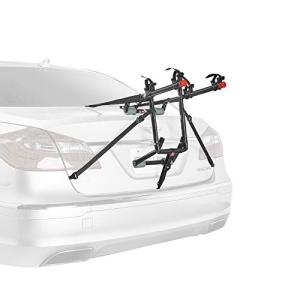
Trunk racks are the entry point for most cyclists. They attach to the back of a sedan, hatchback, or minivan using a system of straps and hooks — no hitch required, no installation needed. You can buy a decent one for under $150, pull it out of the box, and have it on your car in ten minutes.
The limitations are real, though. Bikes rest on support arms and can sway or rub against each other on rougher roads. You lose access to your trunk while the rack is on. And they're generally limited to one to three bikes with a lower total weight capacity. For lighter bikes and occasional shorter trips, a trunk rack is a perfectly reasonable choice. For e-bikes, heavy mountain bikes, or frequent long-distance driving, you'll want to look at other options.
Roof Racks
Roof racks are the cleanest-looking solution — bikes up top, full trunk access below, nothing hanging off the back. If you already have crossbars on your roof (common on SUVs and wagons), adding a bike carrier is usually straightforward and relatively affordable.
Roof-mounted bike racks come in two main designs. Fork mount racks require you to remove the front wheel and secure the bike by its fork. This lowers the bike's profile on the roof and keeps it very stable, but you need space inside the vehicle for that front wheel, and the extra step gets old if you're riding every day. Wheel-mount racks (sometimes called upright racks) let you keep both wheels on the bike, which is more convenient, though they do add significant height to your vehicle — worth keeping in mind before you pull into a low-clearance parking garage.
The biggest downside of roof racks is aerodynamic drag. A bike up top creates noticeable wind resistance, which increases fuel consumption on highway drives. It also adds to your vehicle's height, and yes, people do occasionally forget about bikes on the roof when approaching height-restricted structures.
Truck Bed and Tailgate Options
Pickup truck owners have a few choices that nobody else does. The simplest is a tailgate pad, which drapes over the protected tailgate and lets you lean your bikes against it with the front wheels hanging over the back and the frames resting on the padded surface. A good tailgate pad from a brand like Dakine or Fox Racing is quick to install, stays on your truck all season, and can carry five or more bikes depending on size. They're especially popular with mountain bikers who value speed and simplicity over everything else.
The limitations: tailgate pads work best with adult-sized mountain bikes and road bikes with more upright head tube angles. They're great for shorter drives to local trails but aren't ideal for long highway hauls. You'll also want to make sure the pad's straps are properly secured and your bikes are clean at the contact points to prevent paint damage.
In-bed truck racks offer a more secure setup. These install in the truck bed itself and hold bikes upright or horizontally, keeping them completely inside the bed. The trade-off is that you're giving up bed space and still need to lift bikes up and into position.
For truck owners who want the stability of a hitch rack with the convenience of full bed access, a standard hitch platform rack with a swing-away adapter is often the best of all worlds.
What to Think About Before You Buy
How Many Bikes Are You Carrying?
Most racks are sold as 2-bike or 4-bike versions, with some expandable models that let you add capacity later. For solo riders or couples, a 2-bike rack is usually all you need. Families with kids' bikes should look for racks rated to carry smaller wheel sizes (16 inches and up, generally) and lighter loads. For large groups or shuttle days with a crew, vertical hanging racks or tailgate pads become the most practical option.
What Kind of Bikes Do You Have?
This matters more than most people realize. Carbon fiber frames should never be hung by their frames — you need a tray-style rack that contacts only the wheels. Full-suspension mountain bikes are awkward on hanging racks because of the irregular frame geometry. E-bikes present their own challenge: many weigh 50 to 70 pounds or more, which rules out a lot of trunk racks and lighter hanging racks entirely. Look for racks explicitly rated for e-bikes, with per-bike weight limits of at least 60 pounds.
How Often Will You Use It?
A rack you use twice a summer gets different treatment than one you load up every weekend. If you're using it constantly, ease of loading and unloading becomes a major factor. One-handed tilt mechanisms, foot pedals for adjusting wheel clamps, and tool-free adjustments are all worth paying for when you're dealing with them regularly. If it's purely for occasional use, a more basic setup makes financial sense.
Do You Need Rear Access?
For SUVs and hatchbacks especially, being able to open the rear door with bikes still on the rack is a genuine quality-of-life feature. Tilt-away systems allow the whole rack to hinge away from the vehicle so you can access the back. Swing-away systems go a step further, pivoting on a separate axis for even more clearance. These features add cost but can be absolutely worth it if you're constantly accessing the rear cargo area.
E-Bike Compatibility: What's Changed
E-bikes have genuinely changed the bike rack market over the last few years. Because they're so much heavier than standard bicycles, racks that were designed a decade ago often simply can't handle them. When shopping for a rack to carry an e-bike, check the per-bike weight rating carefully — not just the total capacity. A rack rated for 120 pounds total but only 40 pounds per bike isn't going to work for a 65-pound e-bike.
Many newer platform racks are now explicitly e-bike rated, with reinforced trays, heavier-duty hardware, and loading ramps that let you roll a heavy bike into position rather than lifting it. If you own an e-bike or think you might in the future, it's worth buying a rack that's built for the extra weight from the start.
A Quick Word on Fit
Not every rack works with every vehicle. Before purchasing, check the manufacturer's vehicle fit guide — virtually all major brands (Thule, Yakima, Kuat, Saris, RockyMounts) provide these online. You'll need to know your hitch receiver size for hitch racks, and your roof crossbar spread for roof-mounted options. If you're adding a hitch for the first time, the hardware typically runs $200–$400 installed and opens up the full range of hitch rack options for as long as you own the vehicle.
Price Ranges
Bike racks span a wide price range, and the difference between a budget rack and a premium one is real but not always necessary for every buyer.
Budget trunk racks start around $80–$150 and are perfectly adequate for lighter bikes and occasional use. Mid-range hitch racks land between $250–$500 and represent a solid balance of durability and features for most riders. Premium platform racks from $700 to over $1,000 offer the best loading experience, the most protection for high-end bikes, and longer service life — they're an investment that makes sense if you're riding regularly and carrying valuable equipment.
The best bike rack is the one that fits your vehicle, handles your bikes safely, and doesn't make you dread using it. If you're new to bike racks, a mid-range hitch platform rack is the safest all-around choice for most drivers with an SUV or truck. Sedan and hatchback owners without a hitch should look at trunk racks as a starting point. And if you're a truck owner who just wants to get to the trails fast and easy, a quality tailgate pad might be all you ever need.