The Two Main Types of Bike Child Seats
Front-Mounted Child Seats
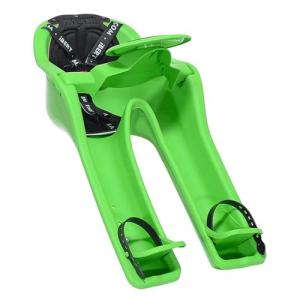
Front-mounted seats sit between you and the handlebars, usually attaching to the top tube or head tube area of the frame. They're particularly popular with younger toddlers and families who value connection while riding.
The biggest appeal is obvious: your child is right there in front of you. You can chat, point things out, keep an eye on their comfort, and react instantly if something's wrong. The shared view of the road gives younger riders a sense of adventure without any anxiety about what's behind them. Many parents describe the experience of riding with a small child nestled between their arms as one of cycling's true joys.
That said, front seats do come with real trade-offs. They have lower weight limits — typically up to about 33 lbs (15 kg) — so they're outgrown faster than rear options. They can also affect your pedaling mechanics, often requiring you to splay your knees outward slightly to avoid bumping into the seat. On smaller frames or bikes with compact cockpits, things can get genuinely cramped.
Front-mounted seats also expose your child to the full brunt of wind, rain, insects, and cold air. A visor or windscreen attachment helps, but it's worth dressing your little one more warmly than you'd think necessary — wind chill at even moderate cycling speeds is surprisingly effective at making small people miserable.
Compatibility is another real consideration. Most front seats work best on bikes with threaded (quill stem) headsets, which are common on city bikes and cruisers. Bikes with threadless headsets — most mountain bikes and higher-end road or hybrid bikes — require specific mounting solutions, and not every front seat will fit. Always check compatibility carefully before purchasing.
Rear-Mounted Child Seats
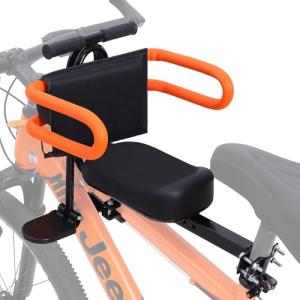
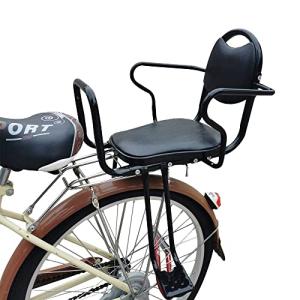
Rear-mounted seats are the most common type and are suitable for a wider age and weight range — generally from around 12–18 months up to 5–6 years, with weight limits often reaching 48–50 lbs (22 kg). They attach behind the rider, either directly to the bike frame (via the seat post or seat tube) or to a rear pannier rack.
The practical advantages are significant. Rear seats don't interfere with your pedaling at all, offer more protection from headwinds, and generally have more space for padding, side protection, and comfort features like reclining backs. Many models include padded five-point harnesses, adjustable footrests with ankle straps, and even built-in suspension springs to soften bumpy roads.
The main drawback is visibility — or lack of it. Your child is behind you, which means you can't see them while riding. For younger or anxious children, this can take some adjustment. It also means you can't easily tell if they've fallen asleep, which is why footrest straps are so important: a sleeping child with loose feet and a spinning wheel nearby is a genuine safety hazard.
Rear seats also shift the bike's center of gravity backward, which can make handling feel different, particularly on lighter bikes. You'll adapt quickly, but be prepared for a brief adjustment period — especially when stopping or maneuvering at slow speeds.
Frame-Mounted vs. Rack-Mounted: What's the Difference?
Within the rear-seat category, there are two distinct mounting systems worth understanding.
Frame-mounted rear seats clamp directly onto the seat tube or seat post of your bike. They're extremely common and work well with most standard steel and aluminum frames. Because they attach to the frame itself, they benefit from whatever suspension your bike has — even the natural flex of the frame absorbs some road vibration, adding to your child's comfort. The downside is that frame clamping requires a clear, round section of tube for the bracket to grip. Bikes with unusual tube shapes, dropper posts, rear suspension pivots, or — critically — carbon fiber frames may not be compatible. Never clamp a child seat onto a carbon frame unless the bike's manufacturer explicitly states it's safe to do so.
Rack-mounted rear seats attach to a rear pannier rack that bolts to your bike's frame. If your bike already has rack eyelets, this is an extremely versatile setup. Some systems — particularly those using the MIK (Mounting Is Key) standard — allow you to click the child seat on and off in seconds, making it easy to swap between a child seat and panniers depending on what the day requires. The key thing to check is the rack's weight rating: you want it to be rated for at least 55–60 lbs to safely support your child plus the seat's own weight. Also note that bikes with disc brakes require disc brake-compatible racks — a regular rack won't work safely.
Key Safety Features to Look For
Not all child bike seats are equal when it comes to safety. Here are the features that genuinely matter:
Harness system. A five-point harness (two shoulder straps, two hip straps, one between the legs) is the standard for younger children and provides the most secure restraint. Look for a child-resistant buckle that little fingers can't accidentally release mid-ride, but that you can operate quickly if needed.
Footrests with ankle straps. Feet getting caught in spokes is one of the most common causes of serious cycling injuries involving child seats. Proper footrests with straps that keep feet securely in place are non-negotiable — not an optional extra.
Protective side panels and head support. A good seat wraps around your child's body with a sturdy shell that provides some impact protection in a fall. Taller backrests with padded head support are especially important for younger children and for longer rides where napping is likely.
Safety certifications. Look for seats that meet recognized safety standards — EN 14344 is the European standard, while ASTM certification is common in the US. These certifications mean the seat has been independently tested for structural integrity, harness strength, and other safety criteria.
Theft protection. Many quality seats include a locking mechanism that prevents the seat from being removed from the bike when you're parked up. If your seat has a quick-release system for easy installation and removal, make sure you also have a way to secure it when the bike is unattended.
Comfort Features Worth Paying For
Your child's comfort is directly tied to how much both of you enjoy the experience. A child who's cold, uncomfortable, or bored will make their displeasure known — loudly and repeatedly.
Reclinable backrests are one of the most genuinely useful comfort features, especially for longer rides. Children fall asleep on bikes more often than you'd expect, and being able to gently recline the seat so they can rest properly (while keeping their feet safely strapped in) makes a real difference.
Washable padding sounds like a minor thing until you're dealing with a toddler who's had a snack mishap at 15 km from home. Removable, machine-washable seat covers save a lot of grief.
Adjustable footrests that grow with your child mean you won't need to replace the seat as quickly. Some models offer significant adjustment range, effectively extending the useful life of the seat by a year or more.
Ventilation matters more than people realize. Padded seats in warm weather can become uncomfortable quickly. Seats with ventilated backrests or breathable materials keep small passengers cooler on summer rides.
Compatibility — Check Before You Buy
This is where many first-time buyers run into trouble. The single most frustrating experience in the child seat world is purchasing a seat, getting it home, and discovering it doesn't fit your bike.
Before you buy anything, check these things:
Frame material: Standard steel and aluminum frames work with most seats. Carbon fiber frames are a different matter entirely — clamp-on seats can damage the structure of carbon tubes. Always check with the bike manufacturer if in doubt.
Seat tube shape and clearance: Frame-mounted seats need a section of round, unobstructed seat tube to clamp onto. Bikes with internal cable routing, suspension linkages, or unusually shaped tubes may limit your options significantly.
Rack eyelets: If you're going the rack-mounted route, your bike needs the correct eyelets to accept a rack. Most touring, hybrid, and city bikes have them; many road bikes and full-suspension mountain bikes do not.
Disc brakes: Disc brake bikes require specifically compatible racks. This is non-negotiable for safety — never install a standard rack on a disc brake bike.
Headset type: For front-mounted seats, the difference between a threaded and threadless headset determines which seats will physically fit. Check your bike before narrowing down your shortlist.
Tips for Your First Rides Together
Once you've chosen and installed your seat correctly, a few practical habits will make the experience better for everyone.
Start short. Your first rides should be brief and close to home — a loop around the block, a flat path through the park. This lets both you and your child get used to how the bike handles with the extra weight, and lets your child get comfortable with the sensation of being on a moving bike.
Get a kickstand if your bike doesn't have one. Loading a toddler into a rear seat while trying to keep the bike upright is genuinely awkward — a good kickstand is one of the best quality-of-life upgrades you can make.
Always fit the helmet first. Every ride, no exceptions. A helmet that fits correctly sits level on the head with the straps forming a snug V-shape just below each ear. If you can't get a secure helmet fit, the ride doesn't happen.
Dress your child warmer than you'd dress yourself. They're sitting still while you're generating body heat through pedaling. On cool days especially, the temperature difference between rider and passenger is surprising.
Check all fastenings before every ride — harness, footrests, the seat's connection to the bike. It takes about 30 seconds and it's the most important pre-ride ritual you can build.
A bike child seat is one of the most rewarding pieces of cycling kit you'll ever buy — not because it's technically impressive, but because of what it makes possible. Morning school runs that double as mini-adventures. Weekend rides that become your child's earliest memories of exploring the world. The kind of quality time that's genuinely hard to replicate in a car.
Take the time to get the right seat for your bike, your child's age and size, and the kind of riding you actually do. The payoff — in smiles, in shared experiences, and in a child who grows up genuinely loving bikes — is more than worth it.