Types of Unicycles — Which One Is Right for You?
Not all unicycles are the same, and the differences matter more than you'd think. Here's a plain-English breakdown of what's out there.
Traditional (Manual) Unicycles
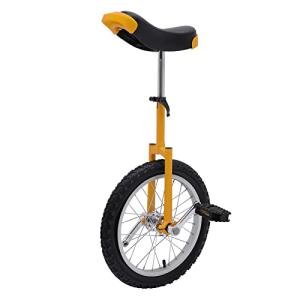
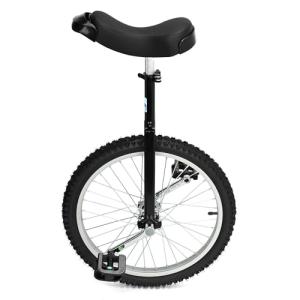
These are the classics — pedal-powered, no motor, no battery. You provide all the energy, and gravity keeps trying to prove a point. Traditional unicycles come in a wide range of wheel sizes, typically from 20 inches up to 36 inches, and each size behaves quite differently.
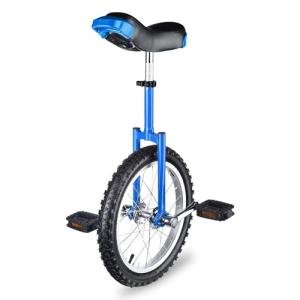
A 20-inch unicycle is highly maneuverable and great for tricks, freestyle riding, and learning. It's the most common choice for beginners and the go-to wheel for street performers, unicycle hockey, and flatland tricks. You sacrifice speed for agility — on a 20-inch wheel, covering distance feels slow and deliberate.
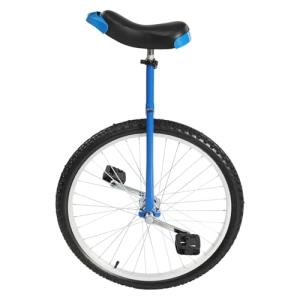
A 24-inch is the sweet spot for most new riders who want something versatile. It's fast enough to enjoy riding around your neighborhood, maneuverable enough to learn on, and the right size for most adults with average inseam lengths. If you're not sure what you want to do with your unicycle yet, start here.
Bigger wheels — 26 to 36 inches — are built for distance and speed. A 36-inch unicycle (sometimes called a "Coker") can comfortably cruise at 12–15 mph and is popular with riders who want to cover serious ground, tackle long bike paths, or even commute. These are not beginner wheels, but experienced riders love them.
Mountain Unicycles (MUni)
Mountain unicycling has its own passionate community, and for good reason. A MUni is built tough — reinforced frame, wide knobbly tires, strong ISIS hub, double-walled rims, and often a hydraulic disc brake. These wheels eat up trails, roots, and rocky terrain that would destroy a standard unicycle in minutes.
Typical MUni wheel sizes range from 24 to 29 inches. The wider, grippier tire gives you traction on loose ground, and the lower gearing helps with steep descents. If you've ever wanted to ride singletrack on one wheel — and it's every bit as ridiculous and exhilarating as it sounds — a dedicated MUni is the right tool for the job.
Trials and Street Unicycles
Trials unicycling borrows from BMX and trials cycling — it's about hopping onto and over obstacles, grinding ledges, and navigating urban environments like a very low-tech parkour artist. A trials unicycle typically has a 19 or 20-inch wheel with an extremely fat, grippy tire, a reinforced frame with a flat (square) crown for foot placement during tricks, and a bombproof hub that can take serious impact.
Street unicycling is similar in spirit but more focused on technical tricks — spins, flips, grinds, and combinations. If you're drawn to this side of unicycling, frame design matters. A square crown lets you rest a foot on the frame for tricks like one-footed riding and coasting.
Electric Unicycles (EUCs)
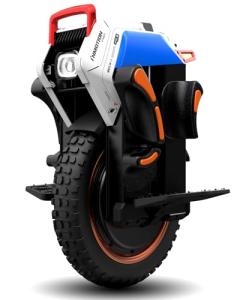
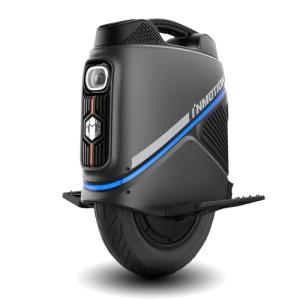
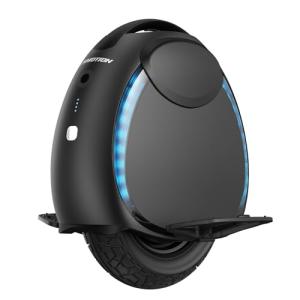
Electric unicycles are a completely different beast — and one of the most interesting personal transport devices you'll find anywhere. At their core, they work through gyroscopic self-balancing technology. Lean forward, and the wheel accelerates. Lean back, and it slows down or brakes. There are no handlebars, no throttle, no remote. Just your body weight communicating with a gyroscope and motor many hundreds of times per second.
The result is eerily smooth. Once you've learned to ride one, it feels less like operating a vehicle and more like an extension of your legs.
Electric Unicycles Up Close — What You're Actually Buying
The EUC market has exploded over the last few years and now spans a huge range of price points, wheel sizes, and performance levels. Here's what to pay attention to.
Wheel Size and Ride Feel
EUC wheel sizes typically run from 12 to 20 inches. Smaller wheels (12–14 inches) are lightweight and easy to carry, making them popular for last-mile commuting, but they feel skittish at speed and struggle over rough pavement. Mid-size wheels (16–18 inches) are the most popular range because they balance portability, stability, and comfort well. Larger wheels (18–20 inches) smooth out bumps noticeably and inspire confidence at higher speeds, though they add significant weight.
As a general starting point, a 16-inch wheel is considered ideal for new EUC riders — stable enough to build confidence but not intimidatingly heavy.
Motor Power and Speed
Entry-level EUCs typically run motors in the 800W to 1,000W range, which is plenty for flat city riding, gentle hills, and speeds up to around 20–25 mph. Mid-range and premium machines push into 2,500W to 9,000W territory, enabling steep hill climbing, heavier riders, and speeds that require full safety gear and a healthy respect for physics.
Most manufacturers impose a speed limit via software (called "tiltback") that gradually tilts the pedals backward to warn you when you're approaching the motor's limits. This is a critical safety feature — ignore it at your own risk.
Battery Range
Range varies enormously based on battery capacity, rider weight, terrain, speed, and temperature. Real-world range is almost always lower than manufacturer claims. A budget EUC might manage 15–20 miles; a mid-range commuter can realistically deliver 30–40 miles; and top-tier machines with massive battery packs can push well past 60–75 miles on a single charge.
If you're buying for daily commuting, add a comfortable buffer to your actual commute distance, and factor in whether you have reliable charging at both ends of your route.
Suspension
Until recently, suspension was a premium feature. Now it's trickling into mid-range models, and once you've ridden a suspended EUC over rough pavement, going back to a rigid one feels jarring. Air suspension and linkage-based suspension systems absorb road imperfections, reduce fatigue on longer rides, and make the wheel feel more planted at speed. If comfort is a priority, it's worth looking for at minimum basic suspension in your chosen model.
Price Tiers
Budget EUCs typically fall in the $600–$900 range. They're fine for casual use and learning but tend to have shorter lifespans and more basic components. Mid-range models from $900 to $1,800 represent the best value for most regular riders — reliable brands, better customer service, and specs that will satisfy most commuters and recreational riders for years. Premium machines from $1,800 to $3,500 and beyond are for enthusiasts who want serious off-road capability, high-speed performance, and long-range touring.
Traditional Unicycle Buying Guide — The Essentials
If you're shopping for a manual unicycle, a few key measurements and decisions will make all the difference.
Inseam Length Comes First
Before anything else, measure your inseam — standing flat-footed, measure from your actual crotch to the floor. This single measurement determines what wheel size and seat post combination will fit your body. A unicycle that doesn't fit your inseam will make learning far harder than it needs to be, and no amount of skill compensates for sitting at the wrong height.
Crank Length and Riding Style
Cranks are the arms that connect your pedals to the wheel hub. Longer cranks give you more leverage and control — great for beginners and for technical terrain. Shorter cranks allow faster pedaling and higher speeds — ideal for distance riding on flat ground. Many experienced riders own multiple crank lengths and swap depending on where they're riding.
Hub Standards: Square Taper vs. ISIS
Beginner unicycles almost always use square taper hubs, which are lighter and cheaper but less suitable for serious impacts. If you plan to do any jumping, hopping, or off-road riding, look for ISIS splined hubs, which are significantly stronger and worth the extra cost.
Safety Gear — Don't Skip This Part
Unicycling has a learning curve, and falls are a normal part of that curve. The good news is that most falls are slow and predictable — you have time to step off rather than crash. That said, protective gear matters, especially for EUC riders where speeds and stakes are higher.
At minimum, wear a wrist guards and a helmet. For EUC riding, particularly as you progress to higher speeds, add knee pads and elbow pads. Many experienced EUC riders wear full-face helmets and motorcycle-grade protective gear at speed. It looks like overkill until it isn't.
Learning to Ride — Realistic Expectations
A traditional unicycle takes most adults anywhere from a few days to a few weeks of regular practice to ride in a straight line. The learning process is genuinely challenging, which is part of what makes it satisfying. Start with a wall or railing for support, keep sessions short, and focus on sitting tall and looking ahead rather than down at the wheel.
An electric unicycle has a shorter but still meaningful learning curve. Most people achieve basic control — starting, moving, turning, and stopping — within a couple of practice sessions. The gyroscope does the balancing work, so you're mostly learning to trust it and manage your weight distribution. Full confidence typically builds over a week or two of regular use.
Who Rides Unicycles?
The short answer: a surprisingly wide range of people. Commuters use EUCs to cover the last mile from a train station, weaving through pedestrian traffic with ease. Fitness enthusiasts find manual unicycling a genuinely demanding full-body workout that engages your core constantly. Kids and adults who've never considered themselves "sporty" discover a challenge they can work at quietly over weeks until suddenly it clicks. Mountain bikers add MUni to their quiver for the sheer novelty and technical challenge of trails on one wheel. And then there are the performers — circus artists, street entertainers, and athletes who take the art form to places that look genuinely impossible until you watch them do it.
Unicycling sits in an unusual sweet spot. It's practical enough to actually use as transport, athletic enough to push your fitness, creative enough to keep developing for years, and unusual enough that you'll never be bored of the reactions you get from strangers on the street.
Quick Reference — Choosing the Right Unicycle
If you're still not sure where to start, here's a plain summary. Choose a 20-inch traditional unicycle if you want to learn tricks, perform, or just see if unicycling is for you. Choose a 24-inch if you want the most versatile beginner experience for general riding. Go 26-inch or larger if distance and speed are your goal and you already have some experience. Choose a MUni if off-road trails are calling. Choose a trials unicycle if obstacles and street tricks excite you. And choose an electric unicycle if you want a genuinely practical, futuristic, and deeply fun personal transport device — just give yourself the time to learn it properly and invest in good protective gear from day one.
There's no wrong entry point. Every type of unicycle rewards patience and practice with something genuinely remarkable: the feeling of moving through the world on a single wheel, exactly where you put it, entirely under your own control.