Who Is B&W International?
Founded with a philosophy that protection and engineering precision should go hand in hand, B&W has built a reputation among professionals across industries — from tool transport to medical equipment — for cases that do exactly what they claim. Their cycling lineup is no different. The Bike Box II is not a side project or a product designed to hit a price point. It is the result of iterative engineering, and it shows.
The Bike Box II is also sold and distributed across the United States through a network of authorized retailers. For North American customers, B&W operates through logistics partners ensuring that cases can be sourced domestically without waiting on transatlantic shipping times.
If you're in North America and want to handle the case before buying, retailers stocking B&W products include major cycling and outdoor gear outlets. You can also purchase directly through Amazon at amazon.com/dp/B01MRKBJ2R.
First Impressions: What You're Actually Getting
Open the packaging on a B&W Bike Box II and the first thing you notice is that this is a proper piece of kit. The successor to the original B&W bike.box, the Bike Box II was awarded the 2018 German Design Award — an accolade that doesn't go to products that merely look the part. It goes to products that earn it through design thinking, material quality, and real-world functionality.
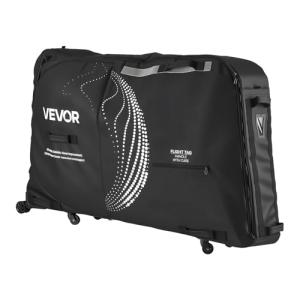
The shell is constructed from ultra high-strength polypropylene copolymer resin through an injection molding process, which is a technical way of saying: this thing is built to take hits. The exterior dimensions come in at 46.90 inches long, 35 inches tall, and 11.6 inches wide, giving you a case that is large enough to swallow a full-size road bike while remaining compact enough to fit in the back of a standard hire car without demanding an upgrade to an SUV.
The color is classic matte black — unassuming at the baggage carousel, professional on arrival.
The Engineering Details That Actually Matter
A Shell That Locks Together at Six Points
The two case shells are interlocking at six points and pulled together with a self-tightening buckle for easy closing and fitting of the case. This is central to understanding what separates the Bike Box II from cheaper alternatives. Rather than a simple clamshell that relies entirely on straps to hold its shape under load, the interlocking system distributes stress evenly around the perimeter. When baggage handlers stack cases — and they will stack cases — the load is spread across the joint rather than concentrated at a single buckle.
The B&W International Bike Box 2.0 is held together by a series of five webbing straps in addition to those interlocking points, creating a layered closure system that is genuinely reassuring when you're watching your case disappear down the conveyor belt at check-in.
Four-Wheel System Built for Airport Floors
Airports are not designed for cyclists. The distances from check-in to drop-off can be considerable, and doing that walk while wrestling with an awkward, unbalanced case is nobody's idea of a good travel day.
The B&W Bike Box II features two smaller wheels at the front that spin through 360 degrees, and two larger fixed direction wheels at the rear, along with four padded strap handles. The result is a case that tracks straight when you pull it on two wheels and pivots cleanly when you need to change direction. Heading to the airport, the B&W International Bike Box II's fantastic maneuverability came to the fore; easily wheeling along the ground either with a hand on the top of the box or at the front padded handle.
The wheels do require a socket set to attach properly during initial setup — something worth noting before your first use — but once fitted, they perform reliably across the tile, carpet, and concrete surfaces you'll encounter in any major international airport.
TSA Compatibility and Security
The case is lockable with a TSA padlock (sold separately) and is TSA approved. This means that when security needs to inspect the contents, they can open it with their universal keys rather than cutting through your straps. What happens after inspection is a topic that comes up regularly in user reviews — more on that shortly — but the TSA compatibility itself is a genuine feature that many cheaper cases lack entirely.
Interior Protection: Multiple Layers, Thoughtfully Arranged
Inside, a size-adjustable anchored mount with straps, as well as two wheel guards, three layers of foam, chain protection, and foam for handlebar and chain ring protection keep the bike steady and protected.
The interior is not simply a padded void. Each component of your disassembled bike has a designated place and a designated form of protection. The frame sits on an adjustable mount anchored to the bottom shell. The fork is secured in an adjustable fork guard. Wheels sit in their own bags. Smaller parts — pedals, quick releases, the odds and ends that accumulate during a disassembly — have storage compartments so nothing rattles loose in transit.
There are compartments or storage and fixing solutions for all other small parts, and all work takes place on the integrated service mat, keeping everything clean even under chaotic conditions and preventing small parts from getting lost.
Fitting Your Bike: What You Need to Know
The B&W Bike Box II fits road bikes up to 62 cm frame size, with the top shell removable completely for easy packing.
In practical terms, this covers the vast majority of road bikes, gravel bikes, and smaller mountain bikes currently on the market. A 56 cm Trek road bike fits without issue. A 61 cm Specialized gravel bike will fit, though you may need to remove the rear derailleur depending on its configuration.
Packing the bike does require meaningful disassembly. You'll need to remove the pedals, both wheels, lower the seatpost, and disconnect the handlebar assembly. For the majority of bikes, you will have to remove the pedals, seat, both wheels, and disconnect the handlebar assembly. For cyclists who haven't done this before, the first pack can take the better part of an hour. By the third or fourth trip, it becomes a familiar routine that experienced users complete in 20–30 minutes.
One genuinely useful tip from the cycling community: do a full practice pack at home before your trip. Assemble the box and then pack it without a bike to figure out the best way to lay out the shells, straps, etc. Apply colored tape to the mating edge to show the correct (and incorrect) way to overlap the edges — green and red masking tape works well, helping both you and the TSA employee who may open the box for inspection.
That last point is worth emphasizing. The interlocking shell system, while mechanically sound, has a learning curve. TSA agents working quickly may reassemble the case without engaging the interlock properly. The colored tape trick has become a widely recommended workaround in the cycling travel community, and it works.
Real-World Performance: Honest Assessment
The B&W Bike Box II has been across oceans, through major international hub airports, and back again. One user took their racing bike on a flight from the US to China with no issues, reporting that the racing bike fit easily into the case and was very well protected. The case showed no signs of wear after the trip — no scratches, and it seemed just as sturdy.
The strength of the plastic box impressed reviewers, who noted it showed only a few minor scuffs from airport handling — a testament to the polypropylene construction holding its own against the realities of baggage conveyor systems and cargo holds.
Multiple users have reported their bike arriving in perfect condition after airplane travel, noting that it was super easy to manage in the airport and that the box comes with good accessories to protect the bike.
Where things get more nuanced is around the TSA repacking issue. The overlapping sections are smart but can be too subtle for TSA agents to figure out without assistance. This is a genuine design consideration. The interlocking system that makes the case structurally robust is also the same system that can confuse a security agent working through dozens of bags in a busy airport. The solution, based on community experience, is the tape trick mentioned above, combined with clear instructions placed inside the lid in multiple languages if you're traveling internationally.
Dimensions and Specifications at a Glance
| Specification | Detail |
|---|---|
| Model Number | 96500 |
| Exterior Length | 46.90 in (119.1 cm) |
| Exterior Width | 11.6 in (29.5 cm) |
| Exterior Height | 35 in (88.9 cm) |
| Interior Length | 45.3 in (115.1 cm) |
| Interior Width | 11.0 in (27.9 cm) |
| Interior Height | 31.9 in (81 cm) |
| Case Weight | ~23.4 – 25.8 lbs (10.6 – 11.7 kg) |
| Shell Material | Ultra High-Strength Polypropylene Copolymer |
| Closure System | 6-point interlocking + self-tightening buckle |
| Wheels | 4 castors (2 fixed, 2 freely rotatable) |
| Max Frame Size | 62 cm road bike |
| TSA Compatible | Yes (padlock sold separately) |
| Award | 2018 German Design Award Winner |
| Color | Black |
| UPC | 4031541727817 |
How the Bike Box II Stacks Up Against the Competition
Choosing a bike travel case means weighing protection, weight, price, and packability against each other. No single case wins every category, which is why understanding where the B&W Bike Box II sits in the market matters.
| Feature | B&W Bike Box II | Thule RoundTrip Pro | EVOC Travel Bag Pro | Bike Box Alan |
|---|---|---|---|---|
| Shell Type | Hard (polypropylene) | Hard (polypropylene) | Soft (padded fabric) | Hard (ABS) |
| Weight (empty) | ~23–26 lbs | ~28 lbs | ~11 lbs | ~30+ lbs |
| Interior Protection | 3-layer foam + straps | Foam + integrated workstand | Padded + support rods | Dense foam |
| Wheels | 4 (2 fixed, 2 rotatable) | 2 fixed | 2 alloy rollers | 4 |
| TSA Compatible | Yes | Yes | Yes | Yes |
| Removable Lid | Yes (full top shell) | Partial | N/A (zip opening) | Yes |
| Fits in Small Hire Car | Yes | Tight | Yes | No |
| Built-in Workstand | No | Yes | No | No |
| Price Range | ~$400–$450 | ~$600–$700 | ~$350–$450 | ~$700–$900 |
| Best For | Road/gravel travelers wanting hard-shell value | Frequent flyers wanting premium features | Frequent flyers prioritizing weight | Pro teams, maximum protection |
| Bike Disassembly Required | Full (pedals, wheels, bars, seatpost) | Partial | Full | Partial |
The recommendation among experienced bike travelers is to buy the B&W Bike Box II if durability and repeated flights matter most, while the Thule RoundTrip Pro suits those who want premium features like an integrated workstand and don't mind the higher price point. The B&W International Bike Box 2.0 is priced at a similar level to soft cases such as the EVOC Travel Bike Bag, but is among the cheapest solid hard-shell boxes, offering fantastic value for the level of protection and maneuverability it delivers.
For the cyclist who wants hard-shell protection without the cost of the premium segment, the Bike Box II represents a compelling midpoint.
Who Should Buy the B&W International Bike Box II?
This case is the right choice if:
You own a road or gravel bike with a frame up to 62 cm and you travel by air more than once a year. You've been using a cardboard box or a soft bag and you've started to notice — or fear — the damage that comes with unprotected airline travel. You want a hard-shell case that doesn't require an SUV to transport or a spare room to store. You're price-conscious but unwilling to compromise on actual protection.
You might want to look elsewhere if:
Your bike has a frame larger than 62 cm, in which case the B&W Curv or a larger competitor will be necessary. You never want to think about disassembly and reassembly, in which case a case with a built-in workstand like the Thule RoundTrip Pro might justify its higher cost. You're a frequent international traveler who has had repeated issues with TSA repacking — in that case, a simpler closure system or a case with more obvious reassembly instructions may reduce stress.
Packing Tips From Experienced Users
Getting the most out of the Bike Box II comes down to preparation. Here's what experienced users consistently recommend:
Before your first trip: Do a complete practice pack at home. Remove all the components, fit the bike into the case, and close it fully. Do this twice before the day of travel so the process is muscle memory, not a puzzle.
Tape the closure edges: Use two colors of masking tape to mark the correct interlocking order of the two shells. This is the single most widely recommended tip across the cycling travel community, and it costs almost nothing to implement.
Weigh the packed case: Use a luggage scale to weigh the packed box and keep it under 50 lbs to avoid extra airline fees. That weight budget is your allowance for packing additional items with the bike, such as tools and gear for your destination.
Leave instructions inside: If traveling internationally, include a bilingual note inside the lid explaining how the interlocking shell system works. Security agents who understand what they're looking at will reassemble it correctly.
Protect your investment: The case itself is built to take damage so your bike doesn't have to. A few scuffs on the polypropylene exterior after a trip to Europe or Asia are a sign the system worked.
There is a category of cycling product that does exactly what it claims, at a price that makes sense, without unnecessary complication. The B&W International Bike Box II is that product.
It is an excellent choice for cyclists who travel exclusively with a road or gravel bike and are seeking great protection and peace of mind. The German Design Award it earned in 2018 wasn't awarded for novelty — it was awarded because this case solved a real problem thoughtfully. The interlocking shell, the four-wheel system, the layered foam interior, and the compact footprint all point to a manufacturer that understood what traveling cyclists actually need.
It is not the lightest case on the market. It is not the easiest to close without practice. And it will test the patience of any TSA agent who hasn't seen one before.
But when you arrive in Girona, or Mallorca, or wherever the season's cycling pilgrimage takes you, and you open that black shell to find your bike exactly as you left it — every component intact, every cable unkinked, the derailleur exactly where you put it — you'll understand what this case is for.
It's for cyclists who take their bikes seriously enough to protect them properly.