Built for the Realities of Modern Air Travel
The Problem With Flying Your Bike
Airlines are not gentle with oversized luggage. Bike cases get stacked, dropped, slid across wet tarmacs, and crammed into cargo holds alongside luggage that weighs significantly more than your carbon frame. The average airport baggage journey involves multiple handling points — check-in, sorting belt, cart transfer, aircraft loading, unloading, carousel — each one a potential hazard.
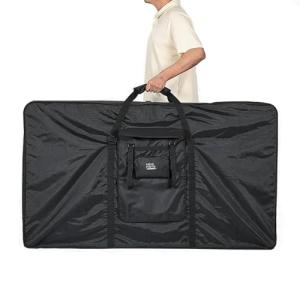
The Exquimac presents a versatile travel case with oversized capacity and four aluminum support bars for added rigidity, emphasizing waterproof fabric, wheel protection tubes, and YKK zippers for durability. That combination of structural rigidity and weather resistance is not marketing language. It is a direct engineering response to the known threats of air freight handling.
Dimensions That Actually Work
The Exquimac accommodates 700C road bikes and 26", 27.5", and 29" mountain bikes, with overall dimensions of 55.12 × 10.63 × 31.5 inches. That sizing hits a practical sweet spot: roomy enough to fit most modern bike geometries without removing the rear wheel in some configurations, yet compact enough to fall within most major airline oversized baggage guidelines when packed efficiently.
For reference, most airlines — including Delta, United, American Airlines, and international carriers like Lufthansa and Emirates — treat bike cases as oversized sporting goods, typically charged a flat fee rather than by weight. Getting the dimensions right matters as much as the protection.
The Four Aluminum Support Bars: Engineering That Earns Its Keep
Why Structure Matters in a Soft Case
The classic criticism of soft-shell bike bags has always been compressibility. Hard cases offer a rigid cocoon; soft bags can be squeezed, sat on, or crushed by heavier luggage in the hold. The Exquimac answers this with four integrated aluminum support bars that create an internal skeleton — a rigid frame within the fabric shell that resists lateral compression without adding the dead weight of a full hard case.
This is the kind of engineering detail that separates a thoughtful product from a generic one. The bars distribute impact loads away from the frame and components, acting as a crumple zone of sorts. When something heavy lands on top of the bag, the aluminum structure takes the force rather than your derailleur.
A Structural Comparison Worth Making
Traditional soft bike bags rely entirely on foam padding to absorb impacts. Premium hard cases use ABS or polycarbonate shells. The Exquimac's hybrid approach — soft outer shell plus rigid internal aluminum support — offers meaningful protection against the most common real-world threats (compression, crushing, glancing impacts) while remaining far lighter and more packable than a full hard case. After a trip, the whole bag can be folded down and stored in a closet rather than taking up permanent residence in your garage.
Waterproof Fabric and the Weather Nobody Accounts For
From Tarmac to Terminal
Airports are not dry places. Bikes are loaded in open air. Rain, sleet, and the general spray of a busy cargo apron are facts of life at airports from London Heathrow to Chicago O'Hare. At Heathrow (London, TW6 2GW, United Kingdom) alone, flights operate through some of the most persistently damp conditions in Western Europe. At O'Hare International Airport (10000 W O'Hare Ave, Chicago, IL 60666, USA), winter operations routinely involve wet snow and standing water on the apron.
The Exquimac is made with premium waterproof fabric and reinforced with 1.4-inch thick foam, PE panels, and honeycomb padding, designed to shield a bike from impacts, rain, and general wear. The waterproofing is not a thin DWR coating that wears off after three trips. It is built into the fabric construction itself, meaning your bike arrives dry even when the ground crew is working in the rain.
Anti-Scratch Base Protection
The design also highlights anti-scratch base strips to prolong bag life and enable easier handling on varied surfaces. This matters more than it sounds. The base of a bike bag takes constant abuse — dragged across concrete, slid across tile floors, scuffed by trolley wheels. The reinforced base strips reduce wear in exactly the area that fails first on cheaper bags.
YKK Zippers: The Detail That Tells You Everything
Why Zipper Quality Is Non-Negotiable
A bike travel case is only as reliable as its weakest point, and on most bags, that point is the zipper. The Exquimac uses YKK zippers — the industry gold standard, manufactured by YKK Group (headquarters: 1 YKK Center, Kurobe City, Toyama Prefecture 938-8601, Japan), the world's largest zipper manufacturer and the supplier of choice for premium luggage, outdoor gear, and aerospace applications.
YKK zippers are specified by brands including Patagonia, Arc'teryx, and Samsonite precisely because they combine smooth operation with exceptional tensile strength. On a bike bag, where the zipper is subjected to the full weight of a loaded case every time it opens, this is the correct choice. Budget bags use generic zippers that seize, split, or strip after a season of use. The YKK hardware on the Exquimac is built to last the lifetime of the bag.
Wheel Protection Tubes: Solving the Hardest Problem
The Wheel Problem
Wheels are simultaneously the most vulnerable and the most essential part of a bike. Carbon rims crack. Spokes bend. Hubs get damaged. And wheel damage is expensive — a set of quality road wheels can cost more than the bike bag itself. Getting wheel protection right is not optional.
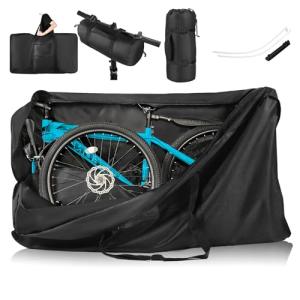
The Exquimac includes dedicated wheel protection tubes — cylindrical protective sleeves that cocoon each wheel and isolate it from the frame and other components during transit. The wheels are not simply thrown into the main compartment to rattle around against the chainring. They are secured in their own protective environment, separated from metal components that could scratch or dent them.
The design supports both road and mountain bikes with a roomy interior and protective padding in critical areas. The wheel tubes are part of that critical area strategy — keeping the most damage-prone components in their own protected space.
Interior Layout: Organized Packing for Real Trips
The Clam Shell Design
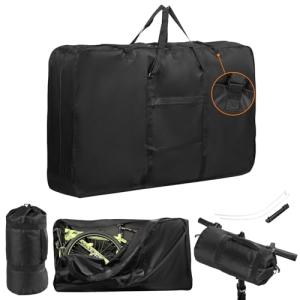
The clam shell design enables the case to be fully opened, making it easy to stow the bike. This is a practical advantage over bags that open only at the top or through a single side panel. Full access means you can lay the bag flat, place the bike in position, and arrange protective padding systematically rather than feeding components through a restricted opening.
For anyone who has ever tried to pack a bike in a hurry at the airport, the difference between full-open access and a partial-open bag is significant. The clam shell layout makes pre-flight packing faster and post-arrival unpacking cleaner.
Handles, Mobility, and the Airport Experience
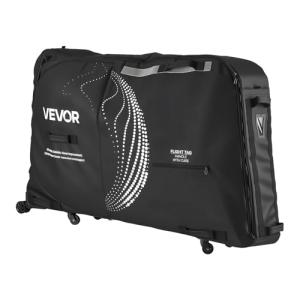
Soft handles on the top and side of the case provide confidence while moving this large case. The front two wheels spin 360 degrees, while the rear rubber wheels allow for horizontal pushing, ensuring smoother and more relaxed transportation.
This wheel configuration mirrors what luggage engineers have known for years: spinning front wheels paired with fixed rear wheels allow a large bag to be steered precisely through crowded terminals without jackknifing or tipping. At major cycling-friendly airports — including Girona-Costa Brava Airport (Vilobí d'Onyar, 17185 Girona, Spain), a gateway for cyclists training in the Pyrenees — navigating with an oversized bag through terminal corridors and shuttle buses demands exactly this kind of thoughtful mobility design.
Compatible Bike Types: Who This Is For
Road Cyclists
The 700C road bike is the primary target. The dimensions and internal padding layout are optimized for the proportions of a modern road frame — longer wheelbase, narrower profile, drop bar geometry. Whether you ride an aluminum endurance bike or a high-end carbon race machine, the Exquimac provides a capable home for it in the hold.
Mountain Bikers
The bag accommodates 26", 27.5", and 29" mountain bikes. That covers the full spectrum of current trail and enduro geometry. MTB riders heading to destinations like Whistler Bike Park (4545 Blackcomb Way, Whistler, BC V8E 0X9, Canada) or the trail networks around Moab, Utah (Main Street, Moab, UT 84532, USA) now have a serious transport option that handles the bulkier proportions of a full-suspension frame.
Gravel and Adventure Riders
Gravel bikes sit between road and MTB in terms of geometry and typically run 700C or 650B wheels with wider clearances. The oversized capacity of the Exquimac accommodates these frames without compromise — an increasingly important feature as gravel racing expands globally.
The Warranty: Confidence in Writing
A product is only as good as its manufacturer's willingness to stand behind it. Exquimac offers a 2-year warranty on the bag, reflecting stated confidence in product quality. For a bike travel case that will see repeated use across multiple seasons of racing and riding, a two-year warranty provides meaningful peace of mind. It signals that the company expects the bag to last and is prepared to make it right if it does not.
Comparison Table: Exquimac vs. Leading Competitors
The bike travel bag market is competitive. Here is how the Exquimac stacks up against four comparable alternatives across the key decision criteria.
| Feature | Exquimac Bike Travel Case | KEMIMOTO Bike Travel Bag | lamaki Bike Travel Bag XXL | SCICON Aerocomfort 3.0 | CyclingDeal EVA Hard Case |
|---|---|---|---|---|---|
| Shell Type | Soft + 4 aluminum support bars | Soft (900D fabric) | Soft (1680D nylon) | Soft with internal frame | Hard (EVA shell) |
| Waterproofing | Premium waterproof fabric | 900D + PU coating | Water-resistant nylon | Weather resistant | Water resistant |
| Wheel Size Compatibility | 700C, 26", 27.5", 29" | 26"–29" | 700C, 26"–29" | Road bikes only | 700C and up to 29" MTB |
| Zipper Brand | YKK | Generic | Premium metal | SciCon proprietary | Standard |
| Wheel Protection | Dedicated wheel tubes | Dedicated compartment | Wheel-in design | Integrated | Two padded wheel bags |
| Internal Padding | 1.4" foam + PE panels + honeycomb | Foam padding | Foam inserts | Molded internal frame | Thick EVA foam |
| Structural Rigidity | 4 aluminum support bars | None specified | None specified | Internal frame | Hard shell |
| Mobility | 4 wheels (2 × 360° spin) | Wheels included | Wheels included | Wheels included | Wheels included |
| Storage When Not in Use | Foldable | Foldable | Foldable | Limited fold | Rigid (cannot fold) |
| Warranty | 2 years | Not specified | Not specified | 2 years | Not specified |
| Bike Type Focus | Road + MTB + Gravel | MTB primary | Road + MTB | Road/Triathlon | Road primary |
| Approximate Price Tier | Mid-range | Budget–mid | Mid-range | Premium | Mid-range |
The table reveals where the Exquimac earns its position: the combination of named-brand YKK zippers, four structural aluminum support bars, dedicated wheel protection tubes, multi-layer internal padding, and a two-year warranty is not matched by competing bags at a comparable price point. The SCICON Aerocomfort 3.0 is the more premium option, but it is road-only and commands a significantly higher price. The lamaki and KEMIMOTO offerings are capable but lack the aluminum structural system and YKK zipper quality. The CyclingDeal hard case offers superior impact resistance but cannot be folded for storage and adds considerable weight.
Who Should Buy the Exquimac Bike Travel Case?
The Racing Cyclist
If you travel two to five times per year for cycling events — gran fondos, sportives, stage races, or criteriums — you need a bag that performs reliably across repeated use and diverse airport conditions. The Exquimac's waterproofing, structural bars, and premium zippers are built for exactly this usage pattern. The two-year warranty covers a full racing calendar with room to spare.
The Adventure Traveler
Flying to ride Alpe d'Huez from Bourg-d'Oisans, Isère, France? Taking a carbon road bike to the cycling mecca of Girona? Planning an MTB expedition in the Dolomites near Cortina d'Ampezzo, 32043 BL, Italy? These trips represent a significant investment in time, money, and training. The bag you choose for transport should reflect that investment. The Exquimac does.
The First-Time Bike Flyer
If you have never flown with a bike before, the Exquimac is a sensible first purchase. Its clam shell opening makes packing intuitive. The internal padding and wheel tubes mean you do not need expert knowledge to protect your bike adequately. The four-wheel mobility system makes airport navigation manageable even solo. And if anything goes wrong, the two-year warranty provides a safety net.
Practical Packing Tips for Air Travel With the Exquimac
Getting the most protection out of any bike bag requires methodical packing, regardless of quality. A few practices make a real difference:
Remove the front wheel. This is standard for nearly all bike bags and reduces the overall footprint significantly. The Exquimac's wheel protection tubes mean the front wheel is properly isolated and safe.
Lower the saddle. Dropping the seatpost reduces the height profile of the bike and reduces the risk of the post or saddle taking impact during transit.
Protect the derailleur. The rear derailleur is the single most vulnerable component during transit. Wrap it in additional foam or use a dedicated derailleur guard. The Exquimac's PE panels and honeycomb padding provide a base layer, but supplementary protection is wise for high-end groupsets.
Deflate the tyres partially. Cabin pressure changes do not actually require full deflation — the pressure differential in a cargo hold is not extreme — but reducing tyre pressure slightly gives the rubber room to flex without risk.
Use the internal straps. Securing the frame within the bag prevents the bike from shifting during transit. Movement is how damage happens.
A Bag That Takes Its Job Seriously
The market for bike travel cases ranges from sub-$100 fabric envelopes that offer minimal protection to $800+ hard cases that are genuinely tank-like but impractical for storage and carry. The Exquimac sits in the middle of that spectrum with the ambition of the upper end — its aluminum support structure, YKK zippers, multi-layer internal padding, dedicated wheel tubes, and waterproof construction all reflect engineering decisions made by people who understand what happens to bikes in cargo holds.
For travelers who value strong protective features and a spacious interior, the Exquimac provides a robust option compatible with many bike layouts and airline requirements. That assessment from independent reviewers aligns with the engineering story the product tells itself: this is a bag that protects comprehensively, travels intelligently, and stores conveniently when the trip is over.
For any cyclist who has been making do with a borrowed box, a bubble-wrapped gamble, or a too-small soft bag that leaves expensive components underprotected, the Exquimac Bike Travel Case represents an overdue upgrade. Your bike has taken you to remarkable places. It deserves transport that treats it accordingly.