Frame Construction — Folding Without Feeling Flimsy
The skepticism around folding bikes is always the same: does the hinge compromise the integrity of the whole machine? With the Xspec, the portable folding frame is constructed with high tensile steel, which goes a long way toward silencing that concern. High tensile steel is the workhorse material of the cycling world — heavier than aluminum, yes, but dense, strong, and forgiving under load in a way that cheaper alloys simply aren't.
The result is a frame that feels planted and predictable on rough terrain. There's no alarming flex when standing to climb a short steep pitch, and the hinge mechanism itself feels engineered rather than improvised. The full bike weighs in at approximately 40 pounds — not something you'd want to carry up five flights of stairs every day, but perfectly manageable for short carries between transport legs or into a building lobby.
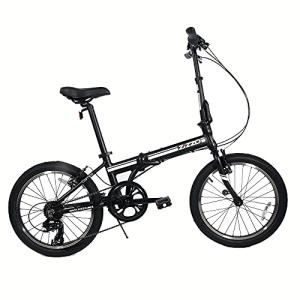
The Xspec bike folds neatly in about 15 seconds, which is the real headline. Fifteen seconds is the difference between a bike you actually fold and one that spends its life in half-folded limbo. It folds small enough to fit into the back of a car, under a desk, or tucked into a corner of a studio apartment — places where a 29er hardtail simply has no business being.
The black colorway is clean, matte, and deliberately understated. It doesn't announce itself the way a candy-colored commuter bike does. It just looks like a serious piece of gear, which, for its intended audience, is exactly the right aesthetic.
The Drivetrain — 21 Gears That Actually Earn Their Keep
A 21-speed drivetrain on a folding bike sounds like marketing speak until you find yourself grinding up a 12% incline or trying to keep pace on a flat road stretch. The 21-speed function gives you the option to cruise or punch it in high gear, and that range matters more in real-world riding than the number itself suggests.
The gear system uses Shimano-quality shifters and a rear derailleur — name-brand components that bring genuine reliability to what is otherwise a budget-tier category. Shimano's indexing is consistent, its shifting is precise, and its parts are universally available when something eventually needs replacing. That last point matters more than most buyers realize at purchase time.
The 21-speed gearing system allows for smooth transitions between gears, making it suitable for various terrains. This flexibility is essential for both climbing steep hills and cruising on flat surfaces. In practice, the lower gears make the Xspec genuinely usable on short climbs and moderately technical trail sections, while the upper range keeps the bike from spinning out on flat commuter roads.
The gear ratios are deliberately balanced — not optimized for speed at the expense of low-end torque, nor calibrated purely for climbing at the cost of road efficiency. It's a compromise, in the best sense of the word. A bike that does many things well is, by definition, a bike built on intelligent compromises.
Braking System — Where the Xspec Earns Real Respect
If there's one area where the Xspec genuinely punches above its weight class, it's the braking setup. The disc brake technology provides stronger, faster, more reliable stopping power than traditional V-brake systems. Disc brakes also do not wear out your tires and last much longer. Since disc brakes are much more consistent, you'll be able to judge braking more accurately.
This is not a small thing. V-brakes are the default brake system on most entry-level bikes, and they're adequate in dry conditions. But put a V-brake bike on a wet trail or a slick urban street and the performance degradation is immediately noticeable — sometimes dangerously so. Disc brakes don't have that problem. They bite consistently regardless of whether the rotors are wet, muddy, or dusty.
For a bike that's positioned as a trail commuter — meaning it's expected to handle both slippery autumn leaves on city streets and loose gravel on weekend trails — disc brakes aren't a luxury upgrade. They're an essential safety feature. The fact that Xspec includes them at this price point reflects a genuine understanding of how this bike will actually be used.
Suspension — Absorbing the World's Imperfections
The dual steel suspension system, front and back, gives the bike a smooth ride that separates it from the rigid-fork folding bikes that dominate the commuter market. Front suspension forks are standard on mountain bikes for a reason — they absorb the kind of repeated sharp impacts that, over a long ride, translate directly into rider fatigue and loss of control.
The front suspension fork helps absorb shocks from rough terrains, enhancing comfort and control and making it easier to navigate bumpy trails. On urban streets, that same suspension smooths out cracked asphalt, storm drain edges, and the kind of road debris that turns a rigid-fork commute into a teeth-rattling ordeal.
The rear suspension adds a second layer of compliance that most folding bikes skip entirely. It's not the same as the full-suspension setup you'd find on a dedicated trail bike, but it provides meaningful cushioning for the kinds of terrain this bike is designed to handle — fire roads, packed gravel, moderate trail surfaces, and less-than-perfect urban pavement.
Wheel Size — Why 26 Inches Still Makes Sense
The cycling world has largely moved on to 27.5" and 29" wheels for trail riding, and for good reason — larger wheels roll over obstacles more easily and maintain momentum better. So why does the Xspec's 26" wheel size hold up?
The Xspec folding mountain bike comes with 26" wheels, which are perfect for traversing a city at high speed, but also for maintaining stability off-road. The 26" format strikes a balance that larger wheels can't quite achieve in a folding context — they're nimble enough for tight urban maneuvering, they fold down to a more manageable package than 29" wheels would, and they're still large enough to provide genuine stability and traction on unpaved surfaces.
The tires offer solid grip on mixed terrain, and the 26" format means replacement tires are still widely available and affordable — an often-overlooked practical advantage over more specialized wheel sizes.
Real-World Riding — Trail and City, Tested
Riders have reported positive experiences on mountain trails, citing the bike's ability to handle bumps and obstacles effectively. For city commuting, the Xspec performs well on paved roads. The folding feature makes it easy to store in bike racks or under desks, making it a practical choice for urban dwellers.
These fully functional folding mountain bikes enable leisure riders to take their bikes on their daily commute but also off-road too. That dual capability is precisely the point. The Xspec isn't trying to be a race bike. It's trying to be the bike you actually ride, consistently, across the full range of your daily life.
Taller riders should note that the stock seat post has limited upward travel. Riders with longer inseams may want to budget for an aftermarket seat post — a minor inconvenience that the bike's overall value proposition comfortably absorbs. The handlebar height is similarly adjustable, and the overall riding position is upright enough to be comfortable for casual to moderate riding without being so upright that performance suffers significantly.
The weight limit stands at 220 lbs, covering the majority of adult riders without issue. Assembly is required out of the box but is straightforward, with most riders completing it in under an hour using basic tools.
Who This Bike Is Built For
The Xspec 26" 21-Speed isn't the right tool for every rider. Serious mountain bikers pushing technical terrain will find its limits. Riders looking for the absolute lightest folding bike will find better options in the aluminum-frame market. And anyone expecting a bike that rides like a $1,500 trail rig for a fraction of the price will be disappointed.
But for the commuter who also rides trails, the apartment dweller with no storage, the traveler who wants a bike that fits in a car trunk, the student who needs to bring their bike inside — this entry-level folding mountain bike functions well both on and off the road. It earns that assessment honestly, without asterisks.
This streamlined frame design is not just for mountain trails. It's also great for students, office workers, urban environments, or any convenient commuting. The breadth of that list isn't marketing filler. It's an accurate description of the actual range of this bike's competence.
Comparison — How the Xspec Stacks Up
| Feature | Xspec 26" 21-Speed | Ancheer 26" Folding MTB | Schwinn Protocol 1.0 | Columba 26" Folding Bike |
|---|---|---|---|---|
| Wheel Size | 26" | 26" | 26" | 26" |
| Speeds | 21 | 21 | 21 | 7 |
| Brake Type | Disc (front & rear) | V-Brake | V-Brake | V-Brake |
| Frame Material | High Tensile Steel | Aluminum Alloy | Steel | Steel |
| Suspension | Dual (front & rear) | Front only | Front only | None |
| Fold Time | ~15 seconds | ~30 seconds | ~20 seconds | ~20 seconds |
| Weight Limit | 220 lbs | 265 lbs | 250 lbs | 220 lbs |
| Shimano Components | Yes | No | No | No |
| Best For | Trail + Commute | Commute + light trail | Budget commuting | Urban only |
The comparison tells the story clearly. The Xspec's disc brake system and dual suspension set it apart from direct competitors at similar price points. Its Shimano drivetrain components add a reliability edge that riders will appreciate after the first hundred miles, when cheaper derailleurs start to show their limits.
Check current pricing and availability at Amazon